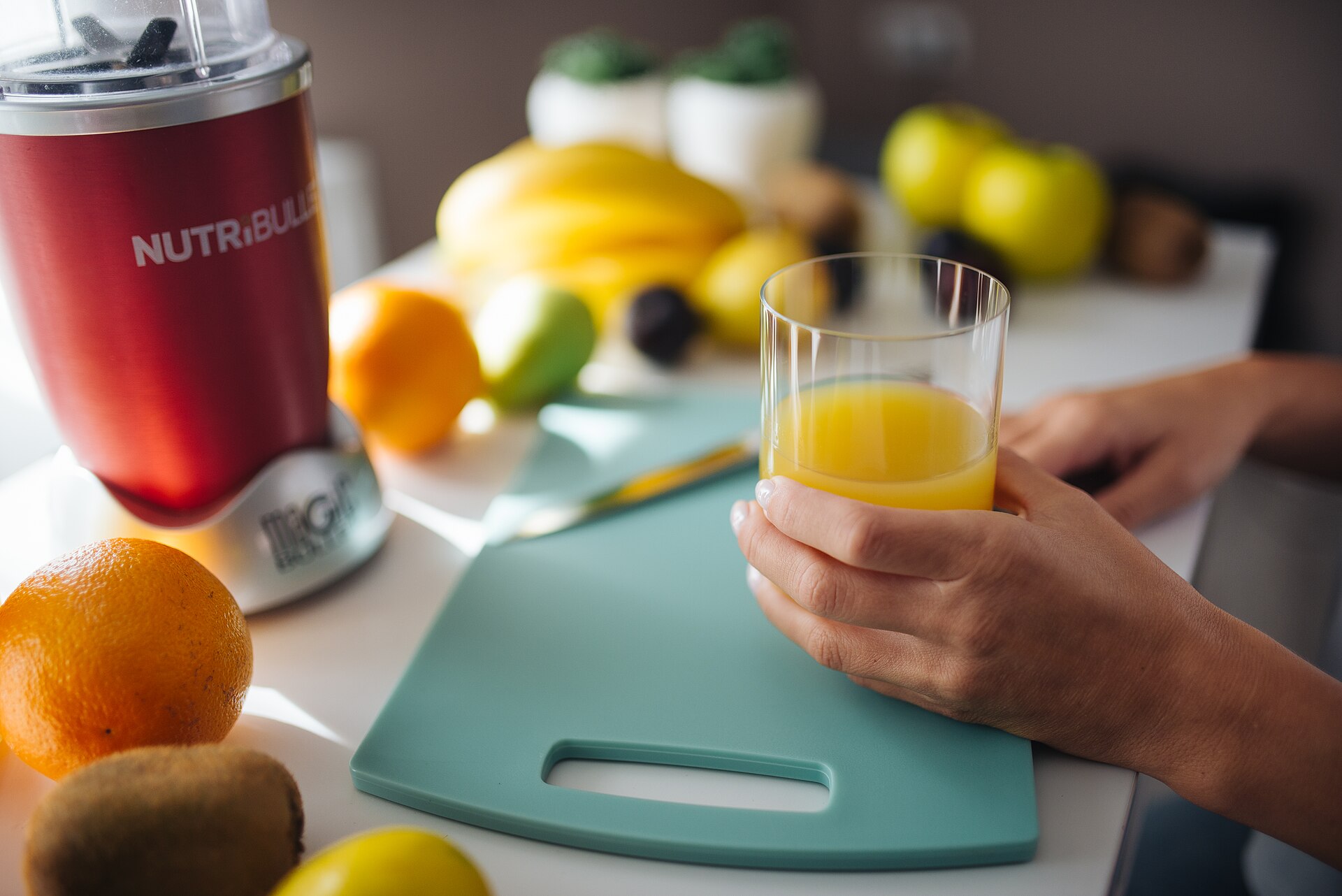
A blender and a juicer both make liquid out of produce, but they are not interchangeable: a juicer extracts juice and discards the fiber, while a blender liquifies everything, fiber included. Neither is "better" — they make different drinks and solve different problems. Here is how to choose based on what you actually want in the glass.
The core difference in one sentence
Juicer = juice only, fiber removed. Blender = everything blended, fiber kept (or strained out manually afterward). Every practical difference follows from that.
What a juicer does better
- Thin, clean juice. The output is true juice — no pulp sludge, no settling, smooth to drink.
- Hard produce. Carrots, beets, ginger, and celery go through a juicer without extra liquid or much prep. A blender needs water and fine chopping to handle them, and still leaves pulp to strain.
- Large quantities. Juicing six oranges is faster and less messy in a juicer than blending and straining batches.
- Clear flavor. Removing fiber makes a brighter, more immediate juice taste.
There are two common types: centrifugal (fast, cheaper, louder, juice oxidizes quicker) and masticating/"slow" juicers (slower, pricier, extracts a bit more, juice keeps slightly longer). For a home beginner, centrifugal is the realistic starting point.
What a blender does better
- Smoothies. This is the blender's home turf — whole fruit, yogurt, oats, nut butter, ice. A juicer cannot make a smoothie at all; the fiber is the texture.
- Whole-food nutrition. Keeping the fiber keeps you fuller and slows the sugar absorption. If "drinking vegetables" is the point, a blended drink keeps more of the vegetable.
- Soft fruit. Bananas, mangoes, berries — soft produce that clogs a juicer and yields little juice anyway — are born for the blender.
- Versatility. One appliance that also does soups, sauces, frozen desserts, and oat flour. If counter space is the constraint, the blender wins on jobs-per-square-inch.
Can you make juice in a blender? Yes — with straining
The blender-as-juicer method works and is worth knowing before you buy anything:
- Chop produce small, add just enough water to get the blades moving (about 1/2 to 1 cup per batch).
- Blend on high until completely smooth.
- Pour through a fine-mesh sieve, nut-milk bag, or cheesecloth; press or squeeze firmly.
The result is real juice — a bit thinner in flavor than a juicer's because of the added water, and with more cleanup because you hand-wash the strainer. For pineapple and other soft, watery fruit it works so well that a juicer adds almost nothing. For carrot-apple it works but takes patience.
Side-by-side on the things that matter
| Juicer | Blender | |
|---|---|---|
| Fiber in the drink | Removed | Kept (unless strained) |
| Texture | Thin, clean juice | Thick, smoothie-style |
| Hard produce | Excellent | Needs chopping + water |
| Soft fruit (banana, berries) | Poor — clogs | Excellent |
| Cleanup | More parts, pulp bin, mesh screen | Jar + lid (+ strainer if juicing) |
| Fullness | Low — sugar without fiber | High — fiber intact |
| Cost of entry | Dedicated appliance | Most kitchens already own one |
| Other jobs | Juice only | Smoothies, soups, sauces, more |
The nutrition trade-off, honestly
Removing fiber is the juicer's real cost: fiber is what slows sugar absorption and makes fruit filling. A glass of fresh juice is a fine thing — see is orange juice good for you for the nuanced version — but it is more concentrated sugar and less staying power than the whole fruit. Blender drinks keep everything, which is nutritionally closer to eating the produce. If fullness and fiber are the goals, blend; if a light, clean juice is the goal, juice.
The cleanup reality
Cleanup is where the decision often actually gets made. A centrifugal juicer produces a pulp bin plus a mesh filter that genuinely needs a brush — five or six parts to rinse, and the mesh clogs if you let it dry. A blender is a jar and a lid: rinse, done. The blender-strainer method adds the sieve, which lands in the middle. If you will not realistically wash six parts after every juice, that is the honest vote for the blender — a juicer you avoid cleaning becomes a very expensive shelf ornament.
What about food processors and immersion blenders?
A food processor can stand in for a blender for soft fruit, but it does not liquify as completely — expect more pulp and a longer strain. An immersion blender handles small batches of soft fruit in the cup it came with; it struggles with anything fibrous. Neither replaces a juicer for hard produce.
Which one should you buy
- Choose the blender if you mostly want smoothies, want one appliance that does many jobs, have limited counter space, or are unsure how often you will juice.
- Choose the juicer if you specifically want thin juice (not smoothies), will juice several times a week, or want to juice hard vegetables regularly.
- Choose neither yet if you are just curious — try the blender-strainer method with what you own. If you use it twice a week for a month, you will know exactly which appliance is worth the money.
For most people starting out, the honest answer is the blender, because it makes both things: real smoothies without straining, and decent juice with it. When the juice habit sticks and the straining starts to annoy you, that is the juicer's audition.