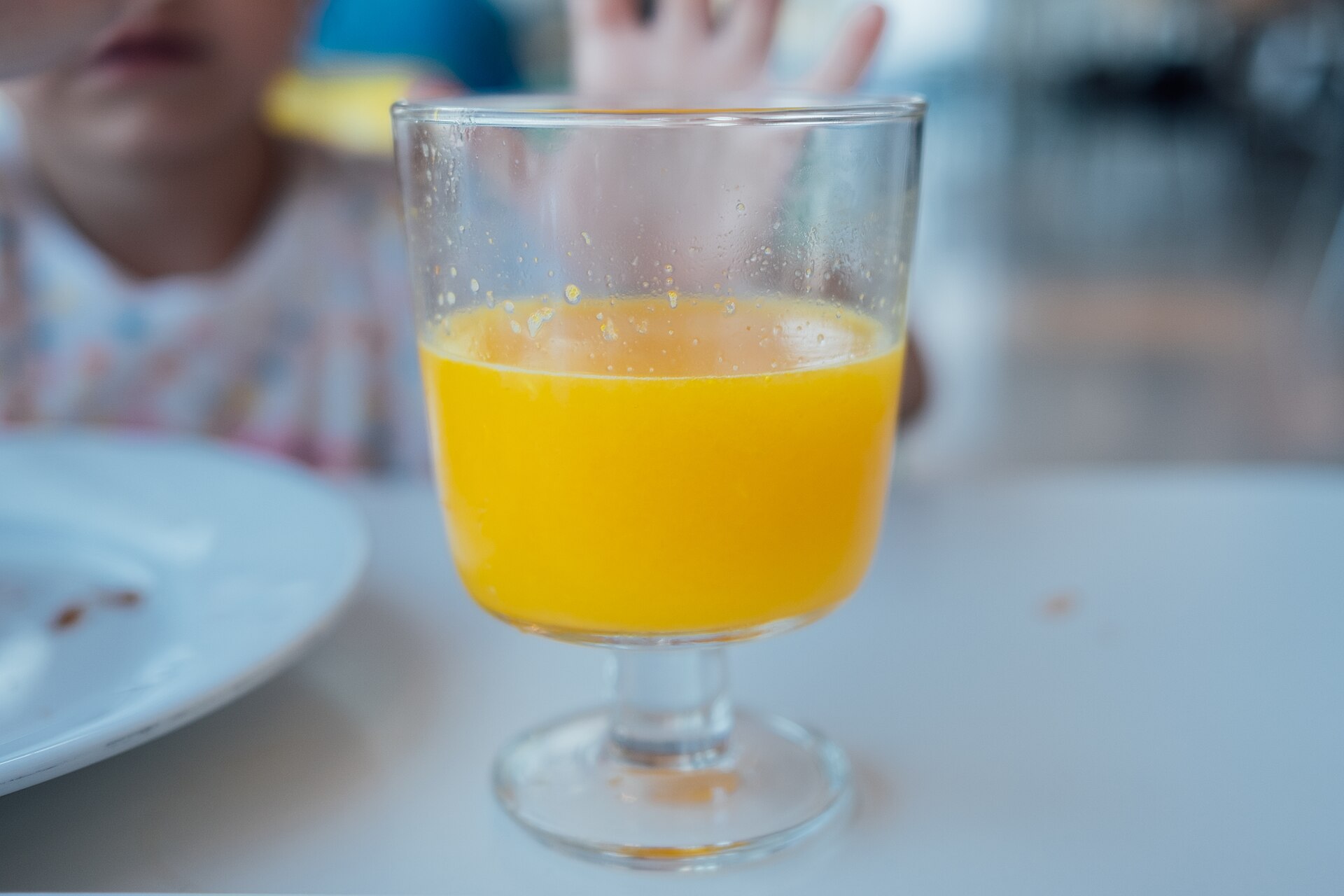
Orange juice sits in an awkward spot: it is fruit, but it is also a glass of sugar with the fiber removed. The honest answer is that 100% orange juice has real nutritional value — vitamin C, potassium, folate — and it also has about as much sugar as soda per ounce, which is why "in moderation" is doing real work in every answer you read. Here is what is actually in the glass, and where reasonable people land on it.
What is in an 8-ounce glass
A standard 8-ounce (240 ml) glass of 100% orange juice contains roughly:
- 110–140 calories
- 21–24 grams of sugar (all naturally occurring from the oranges)
- About 0–2 grams of fiber, depending on pulp
- Vitamin C: typically well over half the daily recommended amount
- Potassium, folate, and smaller amounts of thiamin and magnesium
Fortified versions add vitamin D and calcium. None of that is fake nutrition — but the sugar number is the part that matters.
The sugar question
The sugar in orange juice is naturally occurring fructose and glucose, not added sugar — "no added sugar" on the carton is true and also not the whole story. From a blood-sugar perspective, your body treats juice sugar a lot like other sugars: it absorbs fast because there is almost no fiber to slow it down. Twenty-one grams of sugar in eight ounces is in the same range as many sodas.
That does not make orange juice equivalent to soda — juice brings actual nutrients along with the sugar, soda brings none. But drinking a large glass every morning thinking of it as equivalent to eating fruit is where the gap between reputation and reality lives.
Juice vs. whole fruit
This is the comparison that matters most. Eating an orange gives you:
- All the sugar of the juice, but wrapped in fiber that slows absorption
- The pulp and membranes that juice strips out — that is where the fiber and a chunk of the polyphenols live
- Fullness: one orange is reasonably filling; the three to four oranges' worth of sugar in a glass of juice is not
- A built-in portion limit — you will rarely eat four oranges in a row, but a large glass of juice is exactly that
From a nutrition standpoint, whole fruit beats juice almost every time. Juice is not bad; it is just less than the fruit it came from.
Not all "orange juice" is the same
The label differences matter more than most people realize:
- 100% orange juice (not from concentrate): juice, pasteurized, sometimes stored a while — check for "from concentrate" vs "not from concentrate."
- From concentrate: water added back to condensed juice. Nutritionally similar, often slightly less flavorful.
- Fresh-squeezed: what you make at home — brightest flavor, same sugar profile. See how to make fresh orange juice.
- Juice drinks / cocktails: a small percentage of juice plus water and added sugar. These are the versions where "orange-flavored" on the label is the tell — they are sweetened drinks wearing juice's reputation.
Everything said about orange juice's nutrition applies to 100% juice. Juice cocktails and "juice drinks" are a different product.
Reasonable ways to drink it
None of this requires giving up orange juice. The sensible approaches most dietitians land on:
- Smaller glasses. A 4–6 ounce glass keeps the sugar to 12–18 grams — a treat-size rather than a pitcher.
- With a meal, not alone. Protein and fat alongside blunt the blood-sugar spike.
- Whole fruit most days, juice sometimes. Juice as a regular feature is where the sugar adds up.
- With pulp. The little fiber that survives is better than none.
- Diluted if you want volume. Half juice, half water or sparkling water keeps the flavor at half the sugar.
Who should be more careful
People managing blood sugar (diabetes, prediabetes) get a much bigger spike from juice than from whole fruit — juice is one of the first things clinicians suggest cutting back. Kids' juice intake is worth keeping small for the same reason plus tooth health. And anyone drinking juice for vitamin C could usually get it from an actual orange with less sugar and more fullness.
What about juice cleanses?
A glass of orange juice with breakfast is one thing; a "cleanse" of only juice for days is another, and the claims made for it do not hold up. Your liver and kidneys already remove waste products continuously — no juice accelerates that. What a juice-only stretch mostly does is remove fiber, protein, and fat from your diet while delivering sugar at a fast rate, which is why it tends to produce hunger, energy crashes, and a number on the scale that comes back. Orange juice is a food, not a medical intervention — enjoy it as one.
Fresh-squeezed vs. store-bought, nutritionally
The sugar and calorie counts are essentially the same between fresh and bottled 100% juice — your body cannot tell whether the fructose was squeezed this morning. Fresh juice has somewhat more vitamin C because the vitamin degrades slowly with heat and storage, and it skips the pasteurization taste change. Bottled juice is often fortified with vitamin D and calcium, which fresh lacks. Neither is nutritionally dramatic in either direction; the choice is mostly about taste and effort. If you make your own, fresh-squeezed in five minutes is the method.
The fair verdict
A glass of 100% orange juice is a fine thing — it is a better choice than soda, a real source of vitamin C and potassium, and it tastes like breakfast. It is also a concentrated glass of fruit sugar with the fruit's best feature (fiber) mostly removed. "Good for you" in reasonable amounts, not a health food in unlimited ones — and whole fruit is the better default most of the time. If you want the fresh-juice experience, keep the glasses small, keep the pulp, and see the juice yield math so you know how much fruit is in that glass.