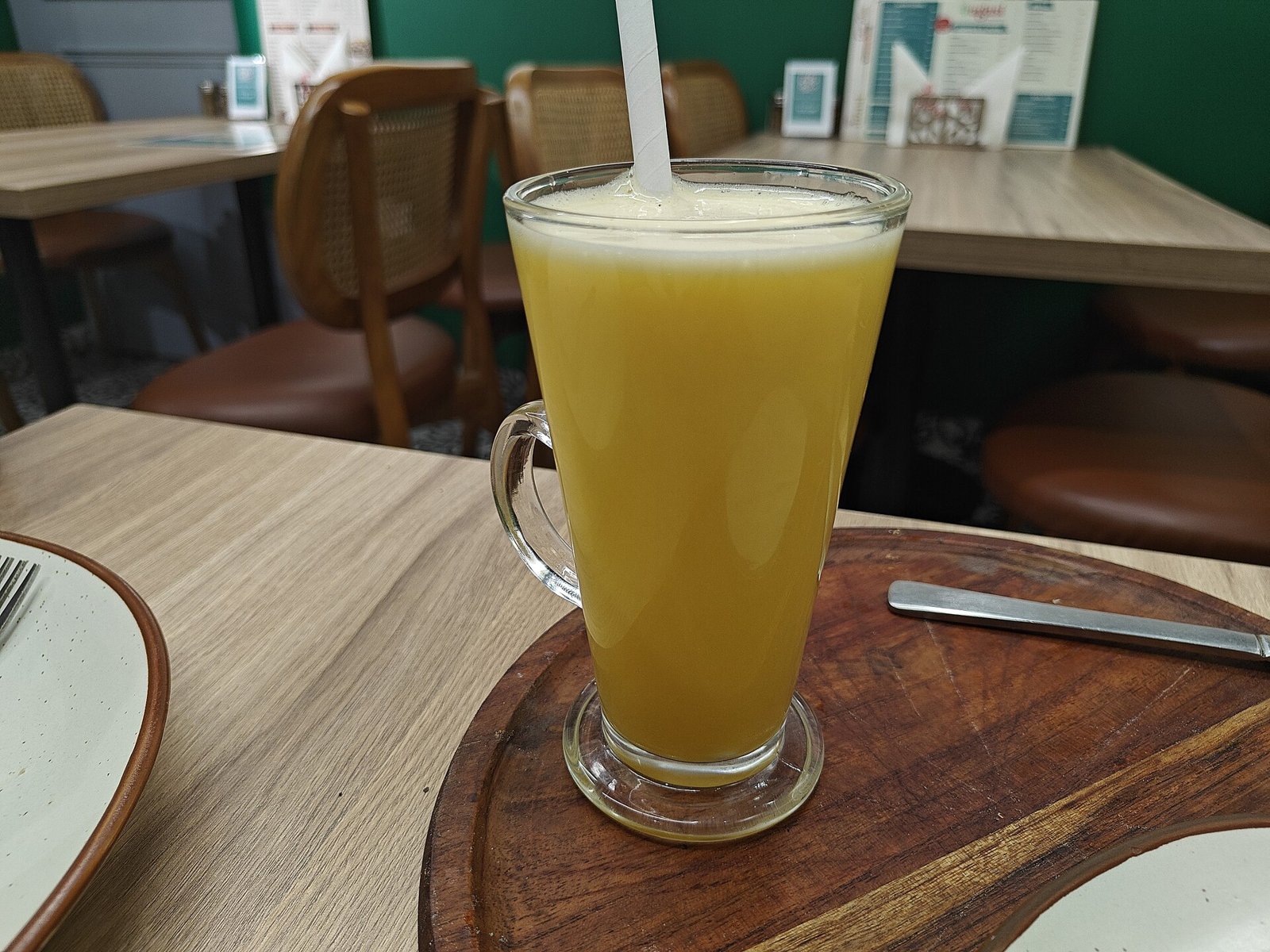
Mango nectar juice is a thick, smooth mango drink made with ripe mangoes and water. Unlike clear fruit juice, it keeps much of the mango pulp, giving it a fuller texture and a naturally sweet flavor.
You can make it in a blender with just a few ingredients. The key is choosing ripe mangoes and adding enough water to make the drink easy to pour without losing its rich mango taste.
Homemade Mango Nectar Juice Recipe
This recipe makes about 2 servings. It uses ripe mangoes for sweetness, so you can adjust the added sugar or leave it out entirely.
Prep time: 10 minutes
Servings: 2
Ingredients
- 2 large ripe mangoes, peeled and pitted
- 1/2 to 3/4 cup cold water
- 1–2 teaspoons lemon or lime juice, optional
- 1–2 teaspoons sugar or honey, optional
- A few ice cubes, optional
Instructions
- Prepare the mangoes. Peel the mangoes, remove the pits, and cut the flesh into chunks. Very ripe mangoes usually blend more smoothly and need less added sweetener.
- Blend the fruit. Add the mango pieces and 1/2 cup of cold water to a blender. Blend until smooth.
- Adjust the consistency. Add more water a little at a time until the nectar is thick but easy to pour.
- Taste and adjust. Add lemon or lime juice if the drink tastes overly sweet. If your mangoes are not very ripe, add a little sugar or honey if needed.
- Serve cold. Pour into glasses and serve immediately, or chill briefly before drinking.
If your mangoes are fibrous, pass the blended drink through a fine-mesh strainer. Otherwise, you can leave the pulp in for a fuller texture.
What Is Mango Nectar Juice?
Mango nectar is a fruit drink made from mango pulp or purée combined with water. Commercial versions may also contain sugar, acidity regulators, or other ingredients, depending on the product.
The word juice is often used casually for homemade mango drinks, including blended mango nectar. However, the terms are not always interchangeable on product labels. A product called mango juice may have a different fruit content and consistency from one labeled mango nectar.
Homemade mango nectar is especially easy to customize. You control how much water goes in, whether to add sweetener, and how much pulp stays in the drink.
Mango Nectar vs. Mango Juice
The main difference is usually the texture and how the drink is prepared. Mango nectar is generally thicker because it contains blended mango pulp. Other mango juice products may be thinner or made from juice concentrate, purée, or a blend of ingredients.
| Feature | Mango nectar | Thinner mango juice |
|---|---|---|
| Texture | Thick and pulpy | Usually easier to pour |
| Mango pulp | Often retained | May contain less pulp |
| Water | Added to adjust consistency | Often added or used during processing |
| Sweetness | Depends on the fruit and recipe | Depends on the product |
| Best use | Drinking, blending, and mixing | Drinking or using as a lighter beverage base |
Commercial definitions and fruit-content requirements vary by market, so check the product label rather than relying on the name alone.
If you make mango nectar at home, you can turn it into a thinner mango drink by adding more water. Start with a small amount and blend again until it reaches your preferred consistency.
How to Make Mango Nectar Taste Better
The flavor depends more on the mangoes than on the number of ingredients. A few adjustments can help you get a better result.
Choose Ripe, Flavorful Mangoes
Look for mangoes that give slightly when gently pressed and smell fruity near the stem. The exact color is not a reliable ripeness test because different varieties develop different skin colors.
Mangoes that are underripe can taste sour or have a firm, fibrous texture. If your fruit is not sweet enough, it may be better to let it ripen before making the drink.
Add Water Gradually
Too much water can make the mango flavor weak. Start with 1/2 cup for two large mangoes, then add more only if the mixture is too thick to pour comfortably.
If you accidentally add too much water, blend in a few more mango pieces or some frozen mango to bring back the body.
Balance the Sweetness With Citrus
A small amount of lemon or lime juice can make a very sweet mango drink taste fresher. It should not make the nectar noticeably sour; start with a teaspoon and taste before adding more.
You may not need any added sugar if the mangoes are fully ripe. Taste the mixture before sweetening it.
Use Cold Ingredients
Chilled mangoes and cold water help make the drink refreshing without relying on a lot of ice. Too much ice can dilute the flavor as it melts.
For a thicker, colder drink, use frozen mango chunks instead of adding several ice cubes.
Can You Make Mango Nectar Without Sugar?
Yes. Ripe mangoes already contain natural sugars, so you can make mango nectar with just mango and water.
Blend two ripe mangoes with a small amount of cold water, then taste the mixture. If it is sweet enough, there is no need to add sugar or honey.
Keep in mind that leaving out added sugar does not make the drink sugar-free. Mangoes naturally contain sugar, and the amount in your finished drink depends on the fruit and serving size. If you are monitoring sugar intake, pay attention to the amount of mango you use rather than looking only at whether you added sweetener.
Can You Use Frozen Mango?
Frozen mango works well and can save preparation time. Let the chunks soften slightly if your blender struggles with very hard fruit, then blend them with cold water until smooth.
You may need a little more water than you would with fresh mango, depending on how much frozen fruit you use and how powerful your blender is. Add it gradually so the nectar does not become too thin.
Frozen mango is also useful when fresh mangoes are out of season or when you want a cold drink without adding ice.
How to Store Homemade Mango Nectar
Homemade mango nectar is best enjoyed fresh, when its flavor and texture are at their best.
If you have leftovers, transfer them to a clean, covered container and refrigerate promptly. Stir or shake the drink before serving because the pulp may settle. For the best quality, aim to use it within 1–2 days and discard it if its smell, appearance, or texture changes unexpectedly.
You can also freeze mango nectar in small portions. Leave a little space in the container for expansion, then thaw it in the refrigerator and stir well before drinking. The texture may change slightly after freezing and thawing.
How to Use Mango Nectar Besides Drinking It
Mango nectar can be used as more than a standalone drink. Its thick texture and fruity flavor make it useful in a few simple combinations.
- Smoothies: Use a small amount as the liquid base with banana, berries, or other fruit. Because mango nectar is already sweet, taste the smoothie before adding any extra sweetener.
- Sparkling drinks: Mix it with sparkling water for a lighter, fizzy mango beverage.
- Fruit drinks: Combine it with pineapple juice or a squeeze of lime for a more tangy flavor.
- Frozen treats: Pour it into ice-pop molds and freeze for a simple mango treat.
For another fruit-based drink, you can also try making smoothies with coconut water. Coconut water gives a lighter result, while mango nectar brings more mango flavor and a thicker consistency.
Frequently Asked Questions
Is mango nectar the same as mango purée?
Not exactly. Mango purée is blended mango flesh, while mango nectar usually includes water and may contain sweetener or other ingredients. Homemade recipes sometimes use the terms loosely, but the amount of water makes a noticeable difference in texture.
Do you need to strain mango nectar?
No. Straining is optional. If your mangoes blend smoothly, you can drink the nectar as it is. Straining may help if the fruit is particularly fibrous or you prefer a smoother texture.
Can you make mango nectar in a juicer?
A blender is usually the easier choice because mango flesh is soft and pulpy rather than naturally juicy. A juicer may not extract the same amount of usable liquid from mango flesh. Blending lets you keep more of the fruit's pulp and adjust the consistency with water.
Why is my mango nectar too thick?
You may have used very fleshy mangoes or not enough water. Blend in cold water a tablespoon or two at a time until the drink pours easily. Avoid adding too much at once, since a watery drink is harder to correct.
Homemade mango nectar is simple to adjust once you get the basic ratio right. Start with ripe mangoes and a little water, then change the sweetness and thickness to suit your taste.