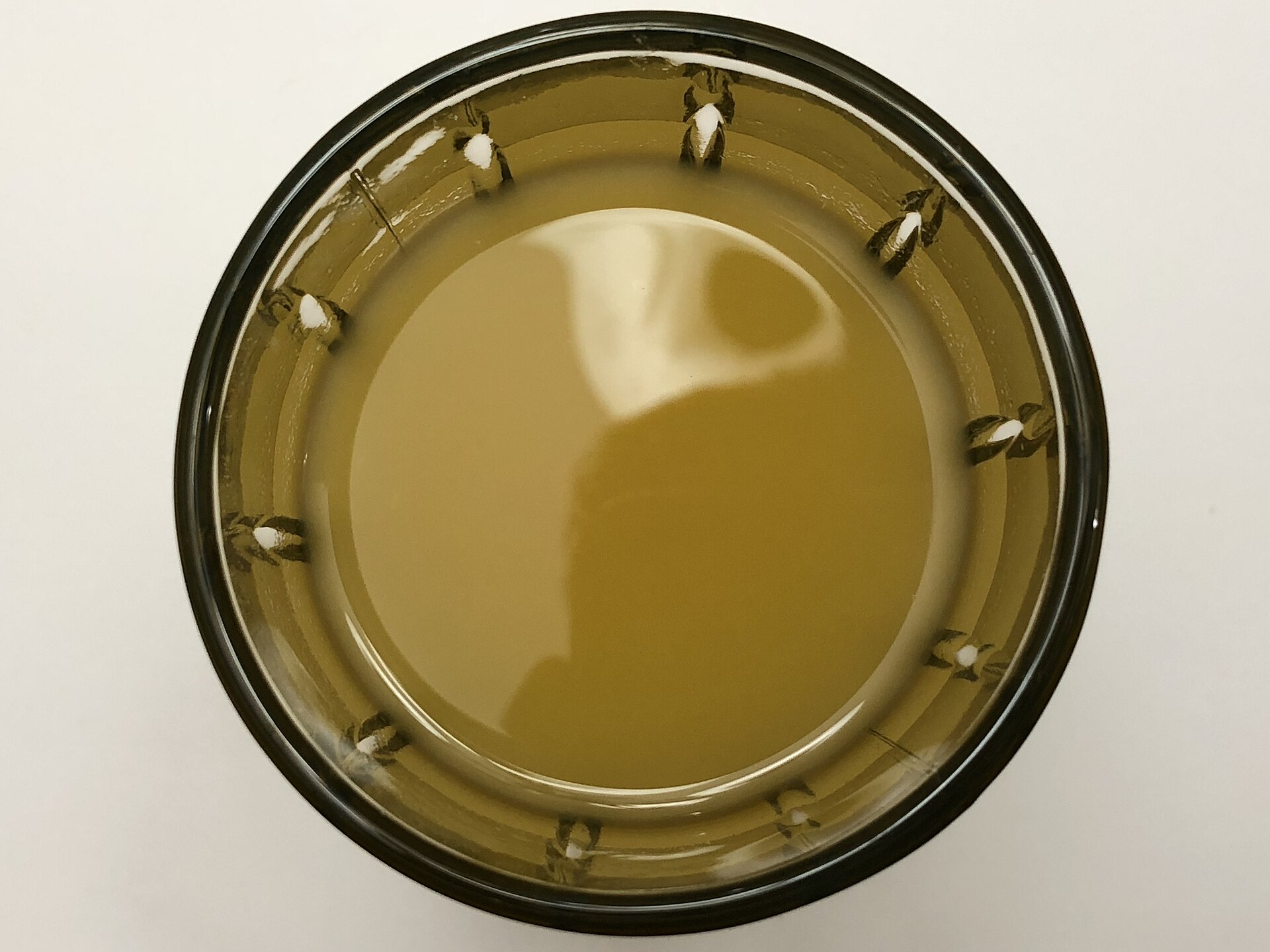
A ripe pineapple gives you one of the best homemade juices there is: sweet, bright, and thick enough to feel like a treat. One medium pineapple yields about four cups of juice — enough for three or four glasses — and a blender is all you need, because pineapple flesh is soft enough to liquefy completely.
Picking a ripe pineapple
There is no perfectly reliable test, but three checks together work well. The base of the fruit should smell sweet and fruity — no smell usually means it was picked too green. The shell should give slightly when pressed, not feel rock-hard. And the color should show some yellow or gold climbing from the bottom; an entirely green pineapple will be sour and low on juice. The old trick of pulling a center leaf does tell you something — if it releases easily the fruit is usually ripe — but it is the least reliable of the three.
Skip fruit with soft brown spots, mold at the base, or a fermented smell. Pineapples do not ripen further after harvest, so what you buy is what you get.
Cutting the pineapple
- Slice off the crown and the base so the fruit stands flat.
- Stand it upright and cut the skin off in strips, top to bottom, following the curve of the fruit.
- Remove the remaining "eyes" with the tip of the knife.
- Cut the flesh into chunks. The core is edible — it is slightly tougher and a bit less sweet, and a blender handles it fine.
Work on a board with a groove or a rimmed baking sheet; a ripe pineapple releases a lot of juice while you cut, and all of that is juice you want to keep.
Blender method (recommended)
- Add pineapple chunks to the blender with 1/2 to 1 cup of cold water — just enough to get the blades moving.
- Blend 30 to 45 seconds until completely smooth.
- Taste, then decide whether to strain. For a thick, smoothie-adjacent juice, drink it as is. For a thinner juice, pour through a fine sieve and press the pulp.
The foam that forms on top is normal. Let the glass sit for two minutes and it settles, or skim it off.
Juicer method
A centrifugal juicer turns pineapple chunks into a thinner, clearer juice with the pulp separated automatically. Feed chunks gradually — overloading soft fruit is the most common cause of a clogged juicer. The juice comes out less thick than the blender version because the fiber is removed.
Flavor adjustments
- Too sour: the pineapple was underripe. A teaspoon of sugar or a squeeze of lime (which reads as sweeter, oddly) helps balance it.
- Too thick: add cold water or ice a splash at a time.
- Too thin: use less water next time, or blend in a few chunks of ripe mango or banana.
- Wants more bite: a small piece of fresh ginger or a mint sprig blended in works well.
Why homemade tastes different from store-bought
Bottled pineapple juice is usually pasteurized and sometimes made from concentrate, which mutes the fresh, slightly floral edge. Fresh juice keeps that brightness for about a day before it starts tasting flatter. It also froths more and separates — that is normal, just stir it.
Common mistakes
- Cutting the fruit before it is ripe. Pineapples do not ripen off the plant — an underripe one stays sour no matter what you do later.
- Adding too much water. Start with 1/2 cup; you can thin but not un-thin. Thick juice is a feature here.
- Overloading the blender. Two smaller batches blend smoother than one packed jar.
- Throwing away the foam-topped first pour. Let the glass stand two minutes instead of skimming and losing juice.
A note about the tingling feeling
Fresh pineapple contains bromelain, an enzyme that can make your mouth tingle or feel slightly raw if you drink a lot of fresh juice. It is harmless for most people and fades quickly. Canned juice does not cause it because heat destroys the enzyme — one reason fresh pineapple juice can make your mouth feel different from the canned kind.
Combinations worth making
- Pineapple-orange: half pineapple, half fresh orange juice — the orange sharpens the pineapple's sweetness.
- Pineapple-carrot: blend pineapple with a small carrot for a deeper orange color and a slightly earthier glass.
- Pineapple-mint: five or six mint leaves blended in; strain them out with the pulp.
- Pineapple-coconut: use coconut water as the blending liquid for a light tropical version.
Storage
Keep it in a sealed container in the fridge and drink within 24 to 48 hours for the best flavor. It freezes well for up to three months — freeze in portions and thaw in the fridge, then shake or re-blend because separation is normal. More detail in how to store fresh juice.
Using the whole fruit
A pineapple generates a lot of scraps, and most of them have a second use. The peel can be simmered into a spiced drink (rinse it first, add cinnamon and a little sugar). The core, though tougher, is fine in the blender where texture disappears. Leftover pulp from straining is not waste: stir it into yogurt, fold it into muffin batter, or freeze it for future smoothies.