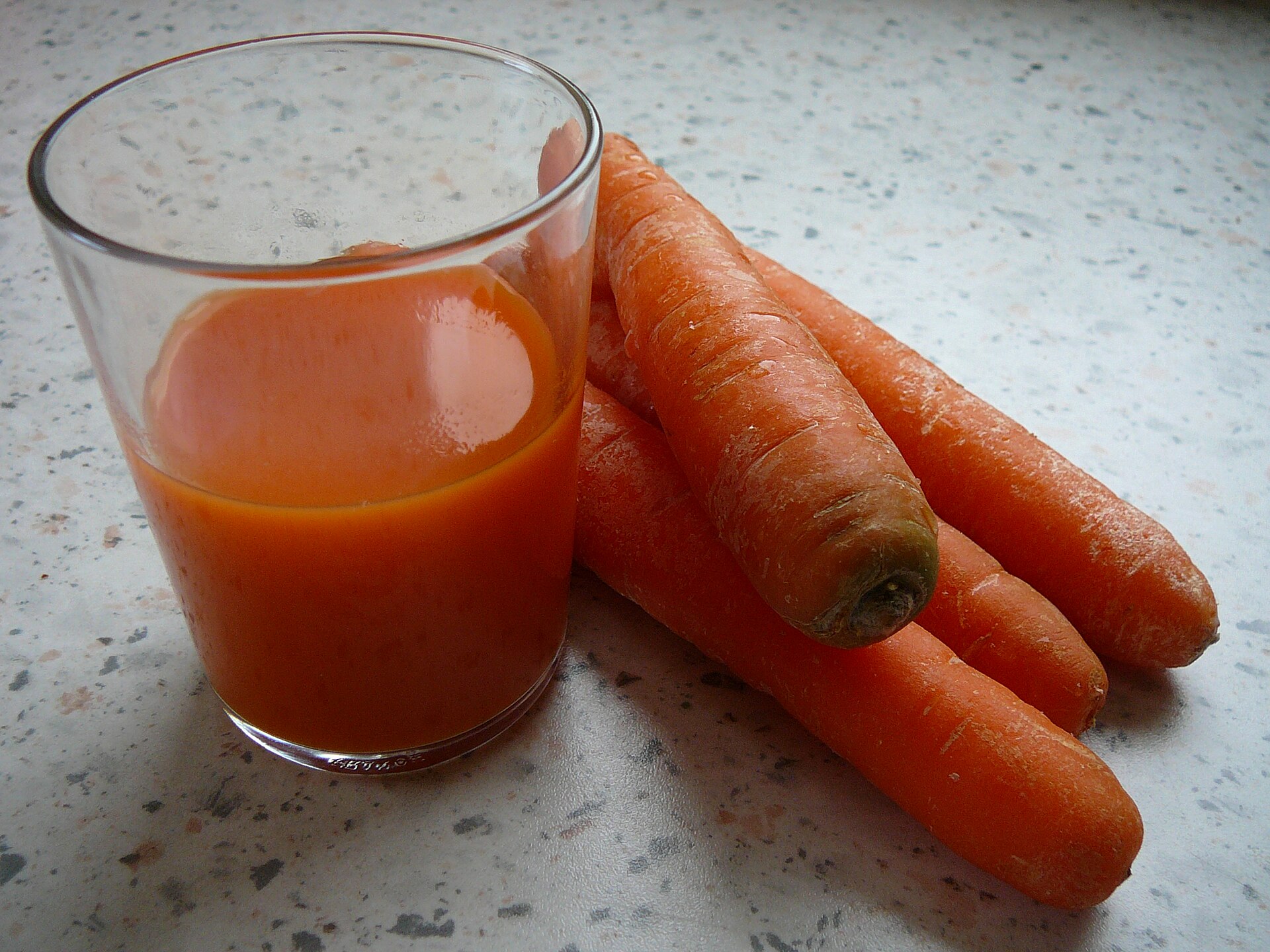
Carrot-apple juice is the classic starter vegetable juice: naturally sweet from the apples, earthy and vivid orange from the carrots, with no added sugar needed. Two large carrots plus two medium apples make about one large glass. The only decision that matters is whether you use a juicer or a blender, because carrots are too hard to squeeze by hand.
The ingredients that matter
Carrots: any fresh, firm carrot works. Older, woody carrots taste more bitter and give less juice. Peel if the skin looks rough or the carrots are not organic; a good scrub is enough otherwise.
Apples: choose by sweetness. Fuji, Gala, and Honeycrisp make a sweeter juice; Granny Smith adds a tart edge that keeps the carrot earthiness in check. Cut out the core and seeds — apple seeds should not go through the juicer.
Optional additions: a thumb of fresh ginger (the most popular add), half a lemon (brightens and slows browning), or half an orange (bridges the flavors).
Juicer method
- Wash the carrots and apples. Trim the carrot tops and cut apples into wedges, removing cores and seeds.
- Feed the carrots through the juicer first — harder produce pushes the softer pulp through.
- Follow with the apple wedges, then any ginger or lemon.
- Stir and drink immediately, while it tastes bright.
Blender method
Carrots need help in a blender. Chop them small — half-inch pieces — and add liquid:
- Add 2 chopped carrots, 2 cored chopped apples, and 3/4 to 1 cup cold water to the blender.
- Blend on high for 60 to 90 seconds, until as smooth as your blender gets it.
- Strain through a fine sieve or nut-milk bag, pressing firmly to extract the juice. Expect a thick, pulpy juice if you skip straining — more like a thin smoothie.
If this is your regular plan, the honest take is that a cheap juicer does this job better; see blender vs. juicer for the real trade-offs.
Ratios worth trying
- Sweet and simple: 2 carrots + 2 sweet apples.
- Brighter: 3 carrots + 1 apple + half a lemon, peeled.
- With a kick: 2 carrots + 2 apples + a 1-inch piece of ginger.
- More vegetable-forward: 4 carrots + 1 apple + a small piece of turmeric or ginger.
Common mistakes
- Juicing soft apples first. Soft produce compacts; start with the hardest ingredient.
- Leaving apple seeds in. Core every apple.
- Letting it sit. The juice oxidizes fast — the top layer turns brownish within an hour. It is still fine to drink, just less pretty and a bit flatter in taste.
- Expecting it to taste like store-bought. Homemade carrot juice is earthier and less sweet; commercial versions often blend in juice concentrates.
What to do with the pulp
Carrot-apple pulp is one of the more useful leftovers: fold it into carrot cake or muffin batter, simmer it into oatmeal, or dehydrate it into crackers. If you compost, it breaks down quickly.
Why carrot and apple work so well together
Carrot juice on its own is earthy and only mildly sweet — fine for a few sips, tiring as a full glass. Apple solves that: it adds brightness and enough natural sugar to make the vegetables taste like a treat without covering them up. The apple also thins the texture; straight carrot juice can feel heavy. The 1:1 ratio is the balance point — shift toward carrot and it gets earthier, toward apple and it becomes a fruit juice with a tan.
Other produce that works the same way
Once this recipe makes sense, you have a template for most firm vegetables:
- Beet + apple: one small beet (scrubbed, quartered) plus two apples — intensely colored, earthy-sweet.
- Cucumber + apple: lighter and more hydrating; no need to peel the cucumber.
- Celery + apple + lemon: the classic green juice base, minus the kale.
- Pear instead of apple: softer, honeyed sweetness that suits ginger especially well.
The rule stays the same: hardest produce through the juicer first, softest last, and a splash of lemon keeps everything brighter for longer.
Storage
Best within 24 hours in a sealed jar filled to the top. Beyond two days the flavor drops off noticeably. Freezing works — see how to store fresh juice for container and timing detail.
Is it worth making at home?
Honestly, this is the juice where homemade matters most. Bottled carrot juice exists but is rare and expensive; carrot-apple is effectively a make-it-yourself drink. The produce is cheap, keeps for weeks in the fridge, and the whole job takes ten minutes. If you are deciding whether vegetable juice fits your mornings at all, this blend is the cheapest audition there is — the same routine that answers whether you need a juicer.
If you like this combination, the same juicer routine handles most firm produce: beets, cucumbers, and celery all work the same way. And if straight vegetable juice feels like a leap, the pineapple juice is the friendliest place to start.