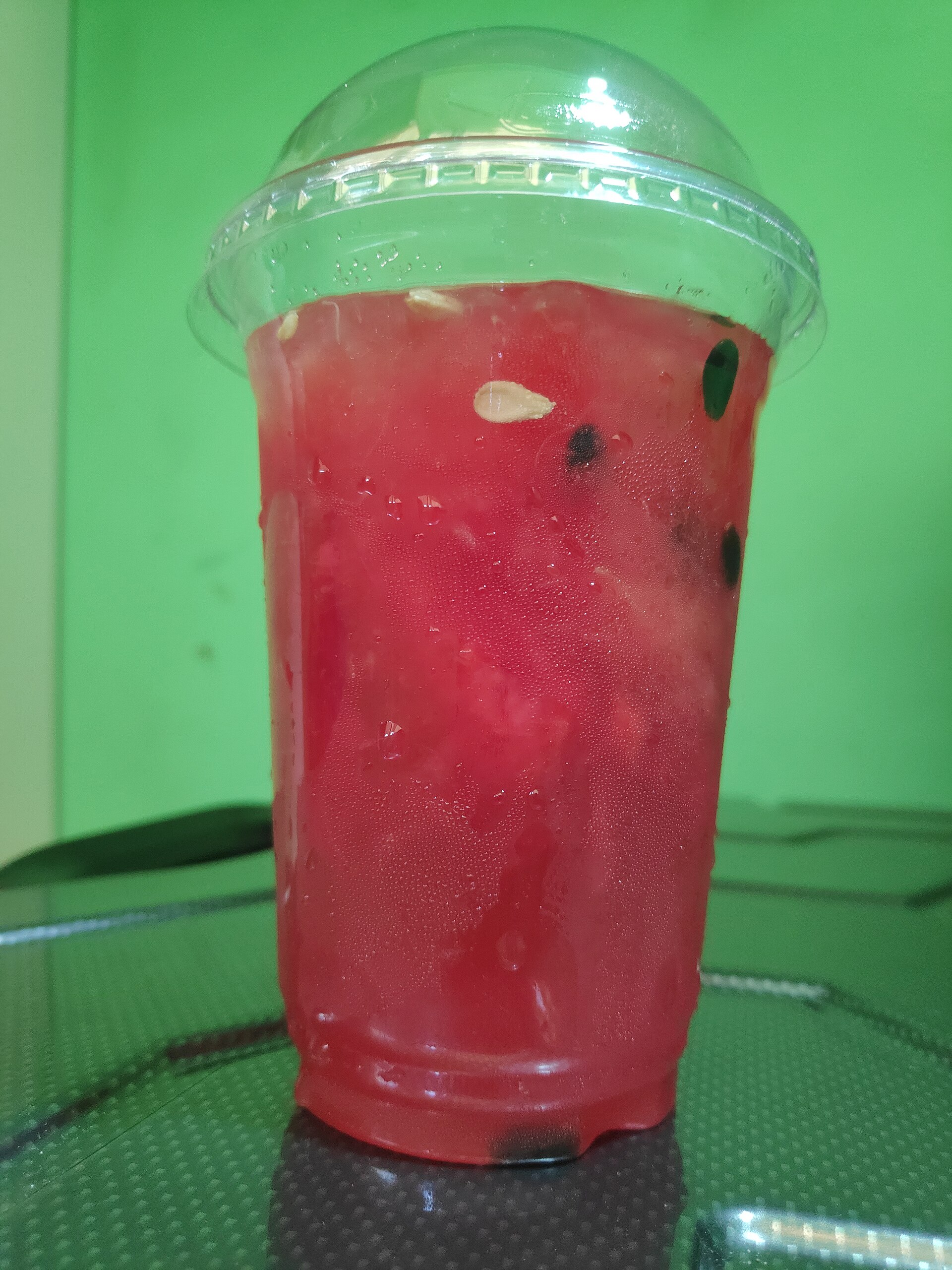
Watermelon is the one fruit that makes a juicer optional by design — it is roughly 92% water, so a blender turns it into juice in about thirty seconds with no straining required. A small watermelon (around 4 pounds of flesh) gives you about a quart of juice, which makes it the cheapest per-glass fruit juice you can make at home.
Picking a ripe watermelon
The whole recipe depends on one thing: a melon that is actually ripe, because an under-ripe one produces watery, faint juice no amount of lime can rescue. Three checks beat everything else. First, the field spot — the pale patch where the melon sat on the ground — should be creamy yellow or orange, not white. Second, pick it up: a ripe watermelon feels heavy for its size because it is full of water. Third, tap it; you want a deep, hollow sound rather than a dull thud.
Seedless watermelons are easier for juicing but not required — the small white seeds in "seedless" varieties blend away completely, and even black seeds can be strained out. Whatever you buy, let the melon sit at room temperature until you cut it; cold watermelon straight from the fridge tastes muted.
The blender method (no straining needed)
- Cut the watermelon in half, then into wedges, and slice the red flesh away from the rind.
- Cut the flesh into rough chunks — about 4 cups for a first batch.
- Blend on high for 20 to 30 seconds. Stop as soon as it looks liquid; over-blending whips in air and makes it foamy.
- Pour into glasses. Done — the pulp is so fine it drinks like juice.
That is genuinely the whole recipe. No added water, no sugar, no equipment beyond a blender or even a food processor.
Should you strain it?
Usually no. Watermelon pulp is soft and mild, so the unstrained version is a slightly thicker, still-smooth juice — closer to a nectar. If you want a thinner, clearer glass, pour it through a fine-mesh sieve and let gravity do the work for a few minutes; pressing the pulp squeezes out a little bitterness along with the juice. Straining also makes sense if your melon has black seeds you would rather not crunch.
Getting the flavor right
A perfectly ripe watermelon needs nothing. A merely okay one benefits from two small moves: a squeeze of lime wakes the flavor up, and a tiny pinch of salt (barely a few grains) makes it taste sweeter without tasting salty. Mint is the classic addition — blend in two or three leaves, not a handful, or it turns grassy. If the melon itself is bland, blend in a handful of strawberries or a little fresh pineapple; they cover the gap better than sugar does.
Variations worth trying
- Watermelon + lime + mint: the standard — tastes like a cooler you would pay for.
- Watermelon + cucumber: half and half, the most refreshing version on a hot day.
- Watermelon + ginger: a small knob of fresh ginger cuts the sweetness.
- Watermelon lemonade: blend the juice with the juice of two lemons and a little water; serve over ice.
- Frozen: blend frozen watermelon cubes for a slushy texture — thinner on the liquid, thicker in the glass.
How long it keeps
Watermelon juice separates faster than most juices — the pulp sinks and the liquid rises within an hour. That is normal; stir or shake and it comes back. In a sealed container in the fridge it keeps about two days, though day-one flavor is noticeably better. The fuller the container, the less air contact, the better it holds — the same rule as every fresh juice. It also freezes well: ice cube trays of watermelon juice are good straight into sparkling water or a smoothie.
Common mistakes
- Adding water. The melon is already 92% water; more just dilutes it.
- Blending the rind. The white part near the rind is edible but bland and slightly bitter — stop cutting at the red.
- Over-blending. Thirty seconds is enough; longer whips in foam.
- Chilling the whole melon first. Cold fruit tastes less sweet; juice it at room temperature, then chill the juice.
- Expecting it to last like orange juice. It fades faster — two days, not three.
Is it worth making?
Watermelon juice is the best effort-to-reward ratio in home juicing: one cheap fruit, one blender, no strainer, no cleanup beyond rinsing the jar. It is also the most forgiving — unlike orange juice, there is no yield math to learn and no bitter pith to avoid. If you are new to making juice at all, this is the confidence-builder recipe; once it is a habit, the same blender handles pineapple just as easily.