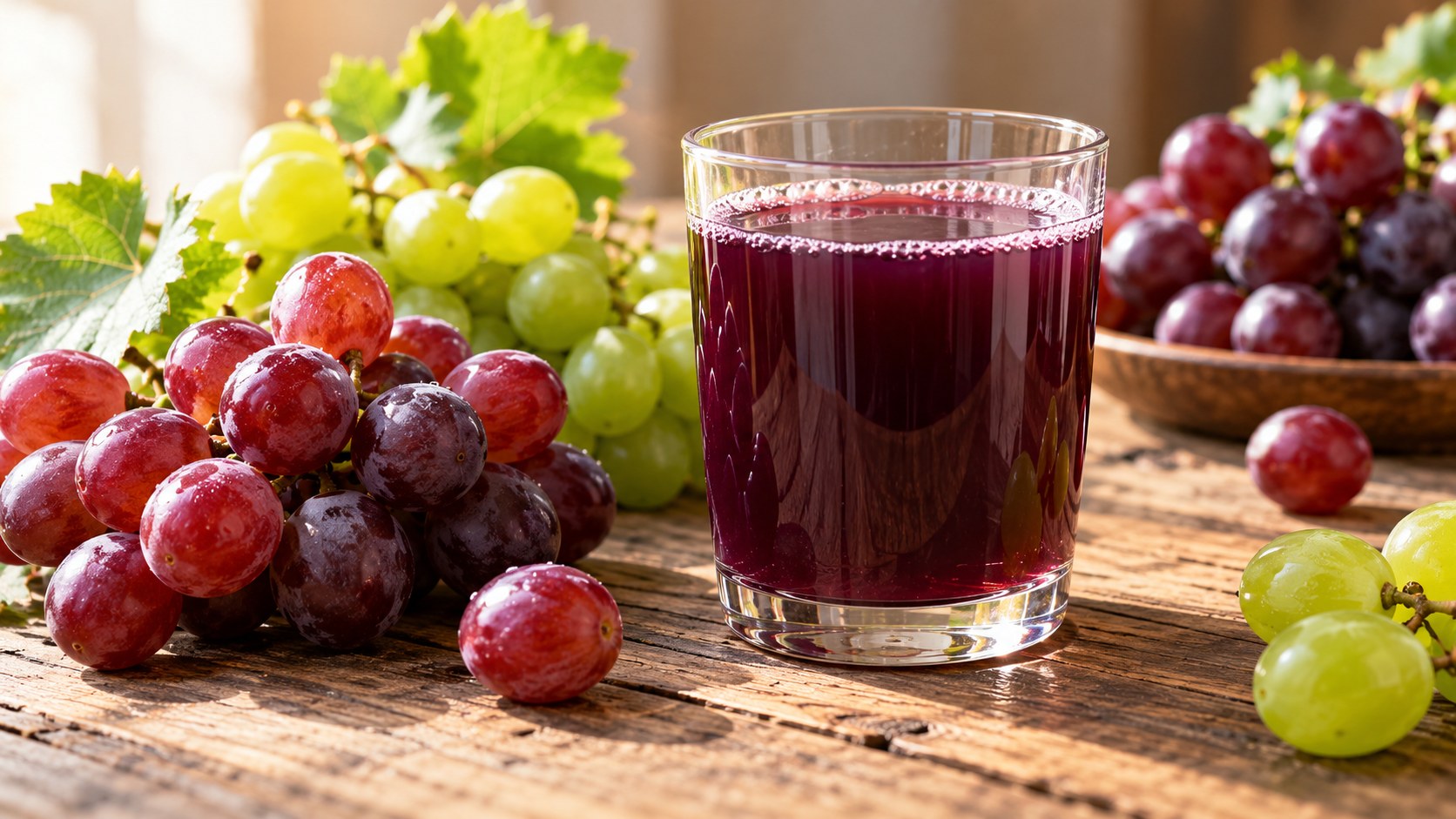
Making grape juice at home is simple, even if you do not have a juicer. With fresh grapes, a blender or saucepan, and a strainer, you can make a fruity drink without buying bottled juice or adding unnecessary ingredients.
The trick is choosing grapes that are ripe enough and using a method that suits the texture you want. Blending is quick and keeps more of the fruit's texture, while gently heating the grapes helps release their juice without requiring a blender.
This recipe explains both methods, how to adjust the sweetness, and what to do if your homemade grape juice tastes bitter, watery, or too pulpy.
Ingredients for Homemade Grape Juice
For approximately 1–2 small servings, start with:
- 2 cups seedless red or purple grapes, washed and removed from the stems
- 2–4 tablespoons water, only if needed for blending
- Sugar or honey, optional
- A little lemon juice, optional
- Ice, optional
Two cups of grapes can produce roughly one small glass of strained juice, although the actual amount varies with grape size, variety, juiciness, and how firmly you press the pulp. If you need a full glass for two people, prepare extra grapes rather than relying on a precise yield.
You do not need to add sugar automatically. Taste a grape first. If the fruit is naturally sweet, the juice may be enjoyable without any added sweetener.
Seedless grapes are the easiest option for the blender method. If you have seeded grapes, remove the seeds before blending to reduce the risk of bitterness.
How to Make Grape Juice in a Blender Without a Juicer
A blender is the quickest way to make fresh grape juice. It works particularly well with seedless grapes.
- Wash the grapes under running water and remove the stems.
- Put the grapes in the blender.
- Blend until the fruit is thoroughly broken down.
- If the mixture is too thick to move, add a tablespoon of water at a time.
- Pour the mixture through a fine-mesh strainer into a clean jug.
- Press the pulp gently with a spoon to release more juice.
- Taste and adjust the flavor before serving.
Avoid adding a large amount of water at the beginning. Grapes already contain plenty of liquid, and too much water can leave the finished drink tasting weak.
For smoother juice, strain the mixture again through a fine-mesh sieve or clean cheesecloth. If you prefer a thicker drink with some fruit texture, you can skip straining or remove only the larger pieces of pulp.
The juice may look cloudy after blending. That is normal for a homemade drink containing tiny particles of fruit. Clear juice usually requires more careful filtration and may yield slightly less liquid.
How to Make Grape Juice on the Stovetop
The stovetop method is useful if you do not own a blender or have grapes with seeds that you would rather not crush.
- Wash the grapes and remove their stems.
- Place them in a saucepan with a small splash of water to prevent sticking.
- Heat over low to medium heat until the grapes soften and release their juice, usually around 10–15 minutes depending on the quantity and ripeness.
- Gently mash the softened grapes with a spoon or potato masher.
- Remove the pan from the heat and allow the mixture to cool enough to handle safely.
- Strain the liquid through a fine-mesh sieve, pressing the fruit gently to extract more juice.
- Let the juice cool before serving or refrigerating it.
The exact cooking time is less important than the result: the grapes should soften and release their liquid without scorching. If the pan becomes dry, add a little more water.
This method produces a cooked grape juice with a softer flavor than juice made from raw grapes. It is convenient for immediate drinking, but ordinary simmering does not make homemade juice shelf-stable.
How to Make Grape Juice Without Pulp
If you prefer smooth grape juice, the type of strainer you use makes a difference.
A fine-mesh sieve removes most of the larger pieces of skin and pulp. It is quick and easy to clean, making it suitable for everyday use.
Cheesecloth can capture smaller particles and produce a clearer result. Pour the juice through the cloth slowly and allow the liquid to drain rather than forcing every bit of pulp through it.
For especially clear juice, strain it a second time. However, more filtration can reduce the final yield because some liquid remains trapped in the pulp.
Do not expect homemade grape juice to look exactly like commercial juice. Packaged products may be filtered or processed differently, while freshly blended juice often retains a cloudy appearance.
If you enjoy a little body in your drink, one pass through a sieve is usually enough.
Which Grapes Are Best for Homemade Juice?
The best grapes are ripe, fresh, and pleasant to eat on their own. Different varieties produce different flavors, so choose according to your preference.
Red grapes: These usually produce a fruity juice with a red or purple color. Their sweetness varies by variety and ripeness.
Purple or black grapes: These can create a deeper color and more intense flavor. Some varieties may also have a slightly more noticeable tannic taste.
Green grapes: These often produce a lighter-colored juice with a sharper, more tart flavor.
Seedless grapes are especially convenient for blending because you do not need to remove the seeds individually. Seeded grapes can still work, but remove the seeds before using a blender.
When shopping, look for firm grapes with fresh-looking skins. Avoid fruit with visible mold, leaking juice, or an unusual fermented smell.
Color alone does not tell you everything about ripeness. Some grape varieties remain green even when ripe, so taste and aroma can be more useful than appearance.
Why Does Homemade Grape Juice Taste Bitter?
Bitter grape juice can be caused by the fruit itself or the way you prepare it.
One common problem is crushing grape seeds in a blender. Seeds contain compounds that can produce a bitter or astringent flavor when broken apart. If you have seeded grapes, remove the seeds before blending.
Grape skins may also contribute a slightly dry, tannic sensation, especially with certain dark varieties. This is not necessarily a sign that the juice has spoiled.
If the juice tastes too bitter, try these adjustments:
- Strain it again to remove more skin and pulp.
- Mix in a small amount of sweeter grape juice.
- Add a little water if the flavor is overly concentrated.
- Use seedless grapes next time if you plan to blend the fruit.
Adding sugar may soften the perception of bitterness, but it will not remove the cause. If the juice has an unusual fermented, rotten, or otherwise unpleasant smell, do not try to disguise it with sweetener.
How to Fix Grape Juice That Tastes Too Watery or Too Sweet
Homemade grape juice can taste different from one batch to another because grape varieties vary in sweetness and water content.
If the juice tastes watery: You may have added too much water or used grapes with a mild flavor. Try using less water next time, choosing sweeter grapes, or blending a small additional portion of grapes into the drink.
If the juice tastes too sweet: Dilute it with a little cold water. A small squeeze of lemon juice can also make the flavor brighter without requiring much extra liquid.
If the juice tastes too tart: Add a small amount of honey or sugar, stir well, and taste again. You can also mix it with sweeter grapes if you have some available.
If the flavor tastes flat: Chill the juice and try a small amount of lemon juice. Start with just a few drops because too much can overpower the grape flavor.
Make one adjustment at a time. It is easier to balance the flavor gradually than to correct a drink that has become too diluted or too sweet.
Why Does Grape Juice Have Sediment After Refrigeration?
Fresh grape juice may separate after sitting in the refrigerator. Tiny pieces of pulp, skin, and other fruit particles can settle at the bottom of the container.
This is common with homemade juice and does not automatically mean it has spoiled. Gently stir or shake the juice before pouring if it has been stored properly and shows no signs of spoilage.
If you want less sediment, strain the juice more thoroughly before refrigerating it. A second pass through a fine-mesh sieve or cheesecloth can remove more particles, although it may also reduce the amount of juice you collect.
Do not confuse ordinary settling with unusual changes such as mold, a rotten smell, or unexpected fizzing. If you notice signs of spoilage, discard the juice rather than tasting it to check.
How to Store Fresh Grape Juice
Fresh grape juice should be refrigerated promptly in a clean, covered container. Do not leave it sitting at room temperature for an extended period.
For the best flavor, drink it as soon as possible. As a practical quality guideline, aim to use refrigerated homemade juice within about one to two days. This is not a guarantee that it will remain safe for that entire period, because handling conditions and the cleanliness of the equipment matter.
You can also freeze grape juice if you want to keep it longer. Use a freezer-safe container and leave space at the top for expansion. Thaw it in the refrigerator and stir before serving, since the texture may separate.
If you want to preserve grape juice at room temperature for long-term storage, follow a tested home-canning procedure rather than simply boiling the juice and sealing it in a bottle. The National Center for Home Food Preservation provides specific instructions for preparing grape juice for canning: https://nchfp.uga.edu/how/can/canning-fruits-and-fruit-products/grape-juice
Ordinary stovetop preparation and refrigeration are not substitutes for a validated canning process.
Can You Make Grape Juice Without Adding Sugar?
Yes. If the grapes are ripe and naturally sweet, you can make grape juice with no added sugar.
Start by tasting the fruit before preparing the whole batch. If it already tastes sweet enough, blend or heat the grapes without adding a sweetener.
If you prefer a slightly brighter flavor, add a little lemon juice. If the grapes are very tart, a small amount of honey or sugar can help balance the taste, but it is entirely optional.
Keep in mind that grape juice still contains naturally occurring sugar even when no sugar is added. Drinking juice is also different from eating whole grapes because straining removes much of the fruit's fiber.
If you want more fiber, consider eating whole grapes alongside your drink instead of relying on juice alone.
What to Serve With Fresh Grape Juice
Fresh grape juice works well at breakfast, as an afternoon drink, or alongside a light meal. Serve it chilled or over a few ice cubes.
If you want a lighter drink, add a little sparkling water just before serving. This gives the juice a refreshing texture without requiring extra sweetener.
You can also explore other homemade fruit drinks. Try fresh orange juice at home for a brighter citrus flavor, or make watermelon juice at home when you want something light and refreshing.
The best homemade grape juice does not need many ingredients. Choose ripe grapes, avoid crushing the seeds, use only as much water as necessary, and adjust the flavor after tasting. Once you find a method you like, it is easy to prepare another batch with the same type of grapes.
# Blog 4: