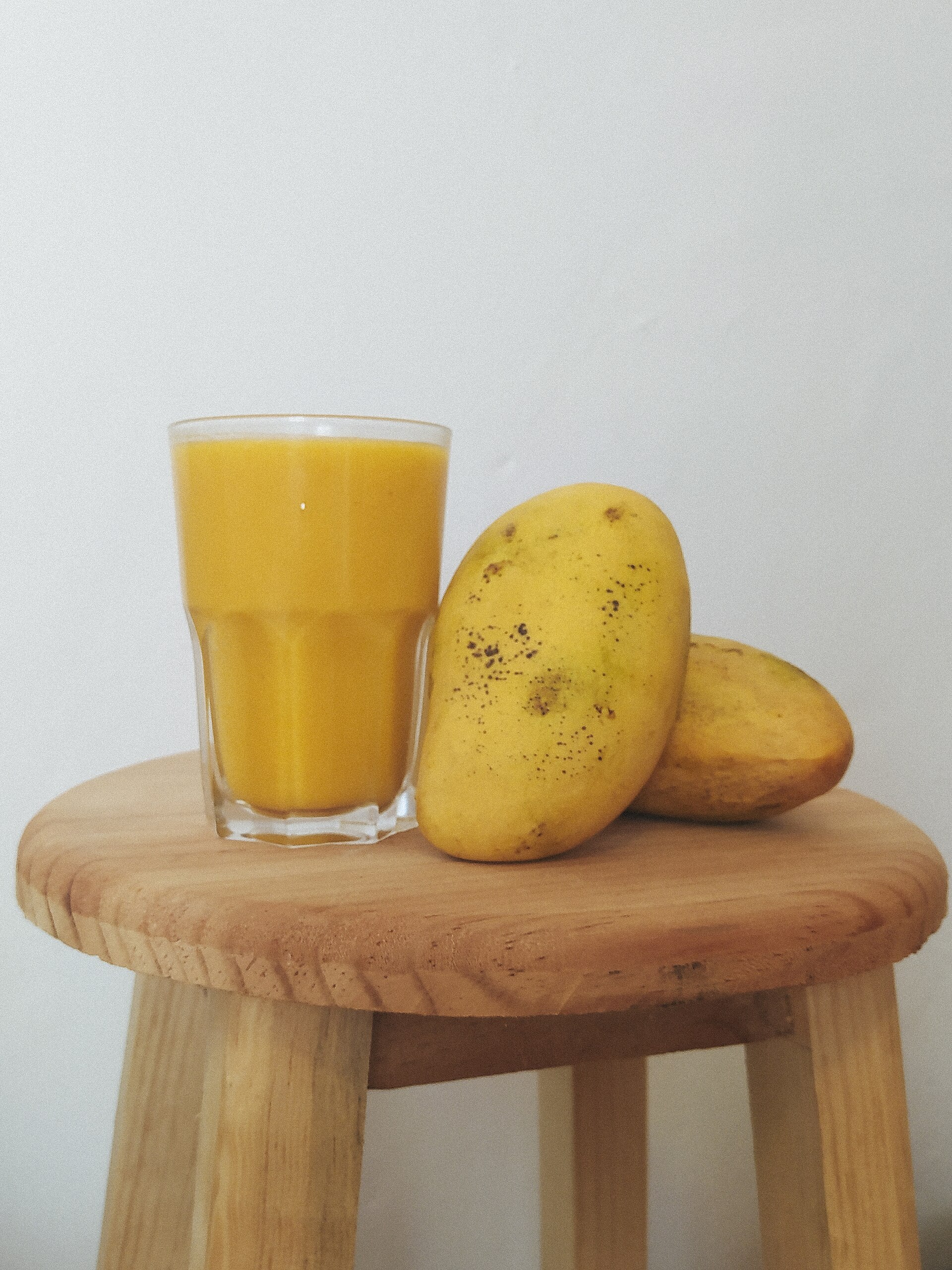
A mango smoothie is the closest a home blender gets to a dessert that still counts as fruit. The base is two ingredients — mango and something liquid — and the only real decision is whether you want it bright and thin or thick like a milkshake. Fresh mango tastes best; frozen mango makes the thickest texture and requires no ice at all.
The ratio
The reliable starting point is 1 1/2 cups of mango chunks to 3/4 cup of liquid. That produces a smoothie you can just about drink through a straw. For a thinner glass go to a full cup of liquid; for spoonable thickness drop to half a cup. Mango is fibrous enough to hold structure even when thin, so you have more room to adjust than with, say, a strawberry banana smoothie.
Fresh vs. frozen mango
Both work; they just make different smoothies. Frozen mango is the easier path — already peeled, already cold, and it thickens the glass the way ice does without watering anything down. If you only have fresh mango and want that frosty texture, add three or four ice cubes or use a frozen banana alongside it. Fresh mango wins on flavor when the fruit is genuinely ripe; frozen wins on convenience every other day of the year.
Buying fresh? A ripe mango gives slightly when you press it — about like a ripe avocado — and smells fruity at the stem end. Color is not a reliable guide since varieties ripen to different shades; go by feel and smell. A hard mango needs two or three days on the counter.
Which liquid
- Milk or plant milk makes it creamy and filling — oat milk is especially good here.
- Plain yogurt thinned with a splash of milk gives you something close to a light mango lassi.
- Orange juice makes it brighter and thinner — this is the version that tastes like a tropical drink.
- Coconut water is the lightest option; clean flavor, no creaminess.
Honey or sugar is usually unnecessary — a ripe mango is one of the sweetest fruits you can put in a blender.
Variations that work
- Mango-banana: swap half the mango for a ripe banana — thicker, mellower, more breakfast-like.
- Mango-pineapple: half and half — sharper, more tropical, works best with orange juice.
- Mango lassi style: use yogurt as the liquid, add a pinch of cardamom if you have it.
- Mango-ginger: a small knob of fresh ginger cuts through the sweetness.
- Green mango smoothie: keep the mango, add a handful of spinach — the green smoothie formula hides it completely.
Fixing the texture
Too thick: add liquid a splash at a time and re-blend. Too thin: more mango, a few ice cubes, or half a banana. Stringy or fibrous: that is the mango variety, not your blender — some mangoes (especially large green-red ones) are just stringier. Blend a full 60 seconds and pour through a sieve if it still bothers you, or switch to frozen mango, which is almost always smooth-fleshed.
Make-ahead notes
Like every fruit smoothie, it is best fresh. A sealed jar in the fridge keeps it drinkable for about a day — it will thicken as it sits, so shake or stir before drinking. Frozen packs work here too: portion mango chunks and any add-ins into bags, freeze, then blend with liquid straight from frozen. See how to store fresh juice and smoothies for container rules.
When mango is in season and cheap this is the smoothie to lean on; the rest of the year the freezer aisle does the same job for a dollar or two more a bag.