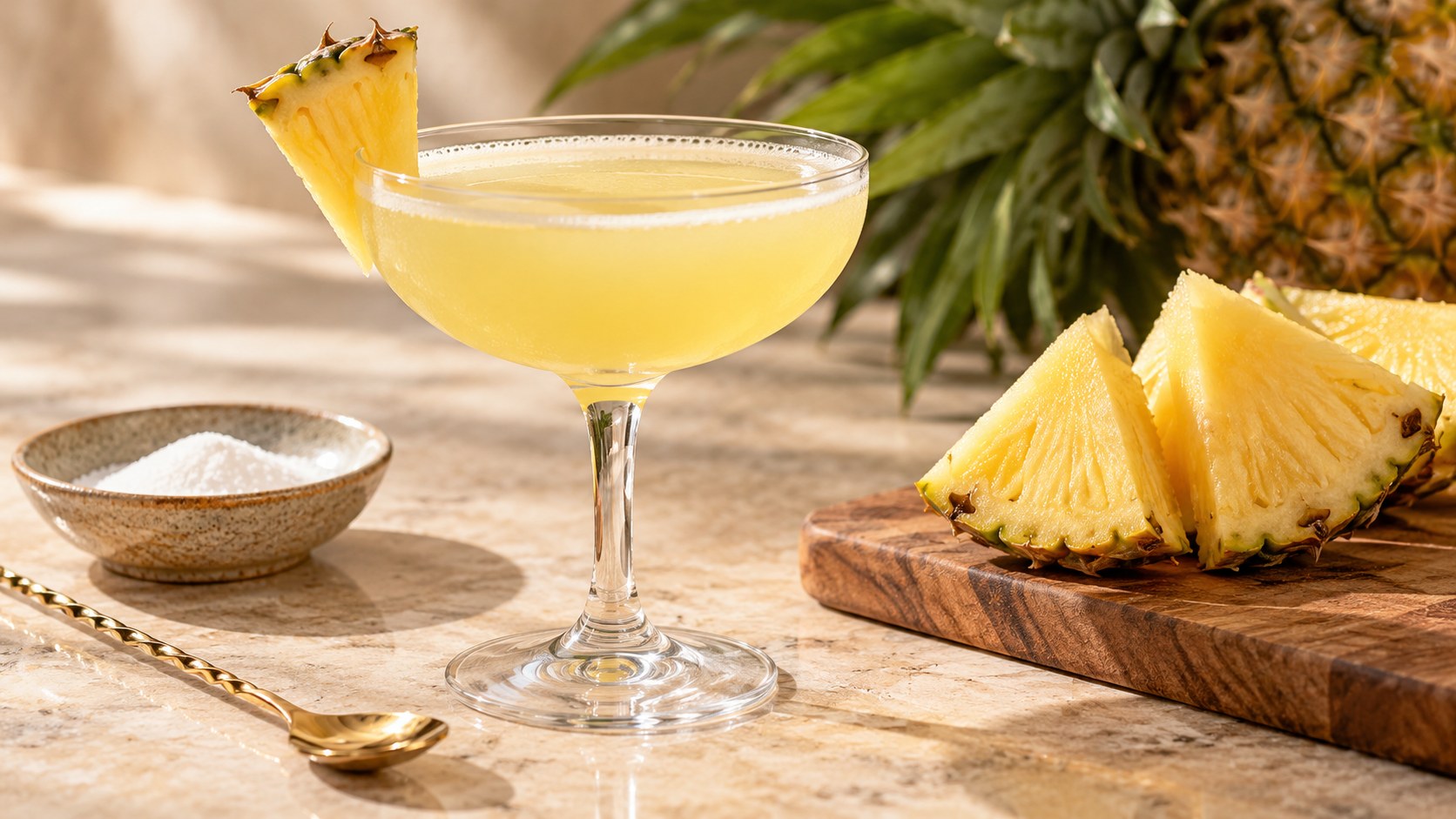
Pineapple juice adds a sweet, tropical flavor to cocktails, but sometimes it lacks the sharpness needed to balance rum and other sweet ingredients. If you want a stronger citrus-like bite without losing the pineapple flavor, acid-adjusting is worth trying.
You do not need to juice a whole pineapple to do it. Canned pineapple juice works, too, making this a convenient option for home bartenders who want to spend less time preparing ingredients.
The process is straightforward: add small, measured amounts of food-grade acid to the juice, mix well, and taste before using it in a cocktail.
Can You Acid-Adjust Canned Pineapple Juice?
Yes. Canned pineapple juice can be acid-adjusted in much the same way as fresh pineapple juice. You do not need to buy a whole pineapple or use a juicer.
The main difference is flavor. Some canned juices taste sweeter and softer, while fresh or cold-pressed juice may have a brighter aroma. The result also depends on the brand and whether the product contains added sugar.
Choose plain pineapple juice rather than a pineapple drink made with extra sweeteners or other fruit flavors. Check the ingredient label before starting.
If you already have a can of pineapple juice in the fridge, use a small portion for your first test. There is no need to adjust the entire container until you know you like the result.
Citric Acid vs. Malic Acid: Which Should You Use?
Citric acid and malic acid are both used to adjust the acidity of cocktail ingredients, but they can give a drink a different impression of tartness.
Citric acid provides a familiar, sharp citrus-like sourness. It is a common choice when you want pineapple juice to have more of the bright bite associated with lemon.
Malic acid contributes a different kind of tartness, often described as a crisp, lingering fruit acidity. It is commonly combined with citric acid when the goal is to make pineapple juice work more like lime in a cocktail.
You can use citric acid alone for a simpler adjustment, but a blend of citric and malic acid offers more flexibility when matching the role of citrus juice in a recipe.
Use food-grade acids intended for food preparation. Do not substitute cleaning products or acids that are not labeled for food use.
A Starting Recipe for Acid-Adjusted Pineapple Juice
A published cocktail recipe from VinePair, based on bartender Garret Richard's formula, uses the following proportions to adjust pineapple juice toward a lime-like acidity profile.
Ingredients
- 100 ml pineapple juice
- 3.2 g food-grade citric acid
- 2 g food-grade malic acid
Method
This is a starting formula, not a guarantee that every brand of pineapple juice will match lime juice exactly. The original juice's acidity, sweetness, and flavor can change how the final mixture tastes.
If you are unsure about the result, begin with a smaller test batch and scale the ingredients proportionally. Do not estimate several grams of acid powder using a spoon or treat milliliters of dry powder as interchangeable with grams.
For a more detailed comparison of acid-adjusted juice and overly sweet canned juice, see our guide to why canned pineapple juice tastes too sweet in cocktails.
How to Acid-Adjust Pineapple Juice Without Making It Too Sour
The easiest mistake is adding more acid before tasting the mixture.
Start with the measured formula above, then taste a small amount. If the juice tastes sharply sour but no longer has a pleasant pineapple flavor, do not keep adding acid.
You can try a fresh test batch with less acid, or blend the adjusted juice with some unadjusted pineapple juice. This lets you bring the acidity back down without introducing a completely different flavor.
Remember that sourness and sweetness are separate parts of the drink's balance. A juice can taste both sweet and acidic at the same time. Acid adjustment is meant to change that balance, not remove all the sweetness from pineapple.
If your canned juice is especially sweet, you may also need to reduce the syrup in the cocktail recipe. Adding acid does not remove the sugar already present in the juice.
Can Acid-Adjusted Pineapple Juice Replace Lime Juice?
Sometimes. The technique is useful when a cocktail needs more acidity but you want pineapple to remain the main fruit flavor.
For example, some bartenders use acid-adjusted pineapple juice in drinks inspired by a Daiquiri, replacing the lime component with a more pineapple-forward ingredient.
However, it is not a universal one-to-one replacement for lime juice in every cocktail. Lime contributes its own aroma and flavor, not just acidity. Acid-adjusted pineapple juice will taste different even when the acidity is similar.
Pay attention to the original recipe:
- If lime juice is included mainly to provide tartness, adjusted pineapple juice may be worth testing.
- If the lime flavor is essential to the drink, replacing it may change the cocktail significantly.
- If the recipe already contains pineapple juice, do not automatically replace all of it with the acid-adjusted version. You could make the drink too sour.
Start by replacing only the citrus portion in a small test cocktail, then adjust the sweetener to taste.
How to Use Acid-Adjusted Pineapple Juice in Cocktails
Acid-adjusted pineapple juice is especially useful in cocktails where the fruit flavor is desirable but ordinary pineapple juice does not provide enough tartness.
You can experiment with rum-based tropical drinks, fruit-forward sours, and recipes that normally use lime juice to balance sweet ingredients.
Make one change at a time. Keep the spirit and other ingredients consistent while testing the adjusted juice so you can judge what the acidity contributes.
If the cocktail tastes too sharp, reduce the amount of adjusted juice or increase the proportion of unadjusted pineapple juice. If it tastes too sweet, review the syrup and liqueur quantities before adding more acid.
The best result is not necessarily the most acidic one. You want enough tartness to balance the drink while keeping the pineapple flavor noticeable.
How to Store Acid-Adjusted Pineapple Juice
Make small batches when you are first experimenting. Store the mixture in a clean, covered container in the refrigerator and use it promptly.
Adding citric or malic acid does not automatically make homemade juice safe for room-temperature storage. Do not assume that a lower pH, a clean bottle, or the presence of acid makes the mixture shelf-stable.
Discard the juice if it develops mold, an unusual smell, unexpected fizzing, or other signs of spoilage. If you prepare an acid solution separately, keep it clearly labeled and follow appropriate food-handling practices.
For occasional home cocktails, preparing only the amount you expect to use soon is often the simplest approach.
Acid-adjusting is a practical way to get more control over pineapple juice without squeezing fresh fruit every time. Start with a measured formula, test a small amount, and adjust the cocktail around the flavor you actually get.
# Blog 5