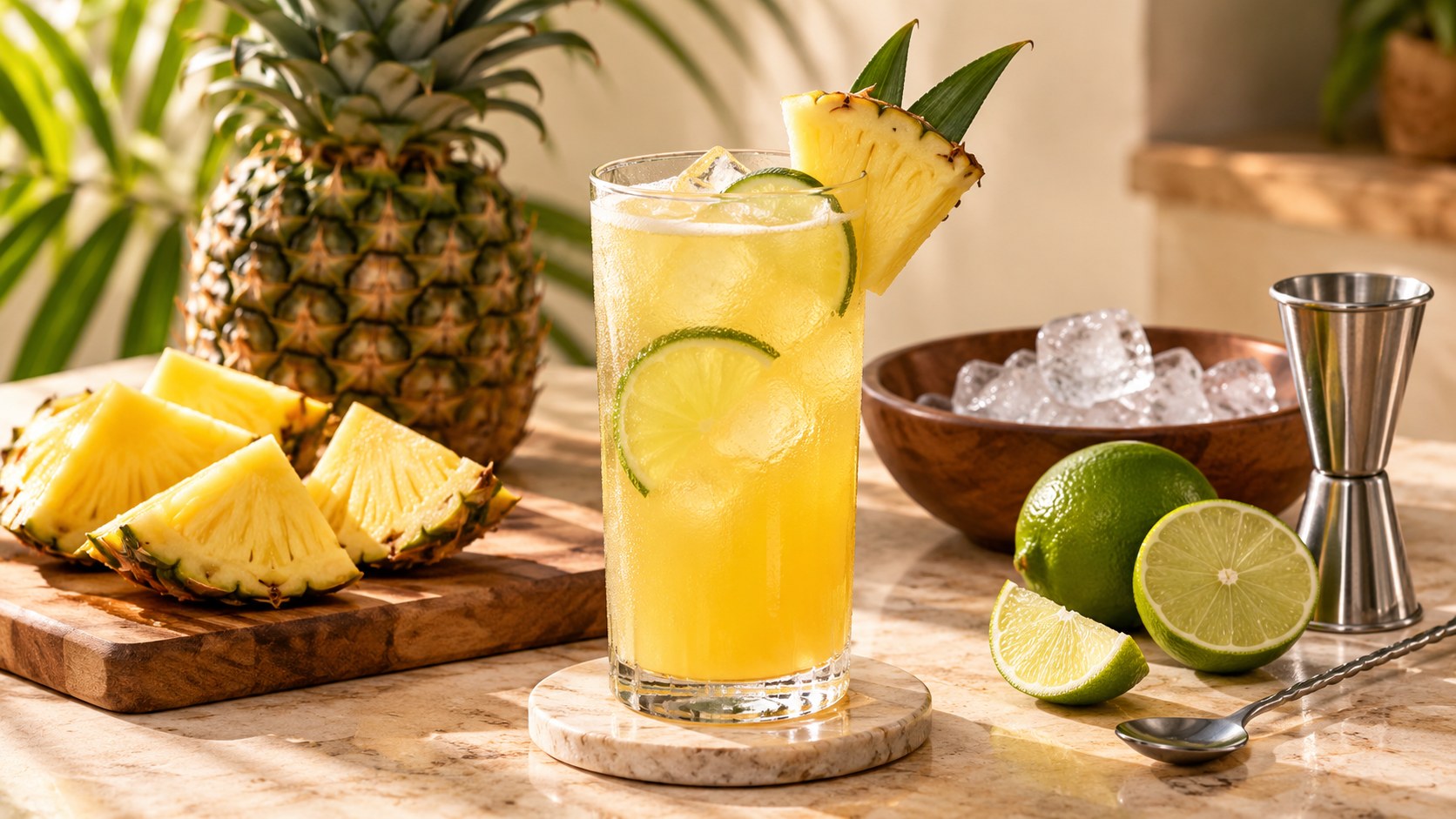
Canned pineapple juice is convenient, easy to measure, and available all year. But when you use it in a cocktail, the result can sometimes taste more like sweet pineapple than a balanced drink.
The problem is not always that the juice contains too much sugar. Pineapple juice also has natural sweetness and acidity, and some products taste softer or less tangy than others. When the juice is mixed with rum, liqueurs, or syrup, the sweetness can become even more noticeable.
You do not necessarily need to throw away the juice or buy fresh pineapple. A few changes to the recipe can help bring the flavors into better balance.
Why Canned Pineapple Juice Can Taste Too Sweet
Several things can make canned pineapple juice taste sweeter in a cocktail than it does on its own.
First, different products have different flavor profiles. Some canned juices have a mild, rounded pineapple taste, while others have a brighter, more tart flavor. Products with added sugar can also increase the sweetness of the finished drink.
Second, cocktails often combine several sweet ingredients. Pineapple juice may be mixed with rum, fruit liqueur, coconut products, or simple syrup. Even if each ingredient tastes fine by itself, the combined drink can become too sweet.
Finally, pineapple juice may not provide enough acidity for the specific recipe. The drink can taste heavy or flat when there is not enough tartness to balance the sweetness.
That is why adding more pineapple juice is not always the best fix. It may make the pineapple flavor stronger, but it can also increase the sweetness.
Check the Juice Before Changing the Recipe
Before adjusting your cocktail, taste the pineapple juice on its own.
If it tastes sweet but still has a noticeable tartness, the main problem may be the amount of juice or syrup in your recipe. If it tastes soft, mild, and almost candy-like, the drink may benefit from a little more acidity.
Check the label, too. Look for plain pineapple juice and note whether the product contains added sugar or is a pineapple drink made with other ingredients.
You can use canned juice for cocktails without a problem. Fresh juice is not automatically better for every drink, and some home bartenders prefer the convenience and consistent flavor of canned products.
The goal is to understand the juice you have, rather than assuming every can needs the same adjustment.
How to Fix a Cocktail That Tastes Too Sweet
Try these changes one at a time so you can identify what improves the drink.
Reduce the syrup first. If the recipe includes simple syrup, honey syrup, or a sweet liqueur, try reducing that ingredient slightly. Do not remove everything sweet at once, because the cocktail may become unbalanced in the opposite direction.
Add more tartness. A small amount of fresh lime or lemon juice can make a sweet cocktail taste brighter. Start with a few drops or a small measured addition, then taste again. Too much citrus can overpower the pineapple.
Use less pineapple juice. If the juice is the dominant ingredient, reducing its quantity may help. Keep in mind that this also reduces the pineapple flavor and changes the drink's overall volume.
Add a little dilution. Water from shaking with ice can soften the intensity of a cocktail. If the drink tastes concentrated or heavy, check whether it has been shaken or stirred adequately before changing the ingredients.
Avoid adding large amounts of acid or water in one step. Small adjustments are easier to reverse and usually produce a more controlled result.
What If Adding Lime Makes the Cocktail Taste Wrong?
Lime juice is a common solution for a cocktail that tastes too sweet, but it is not always the right one.
Lime brings both acidity and its own citrus aroma. If you add too much, the drink may begin to taste like pineapple and lime rather than a pineapple-forward cocktail. That may be fine for some recipes, but not for all of them.
If you want to preserve the pineapple flavor while increasing tartness, try acid-adjusting the pineapple juice itself. This involves adding measured amounts of food-grade citric acid, sometimes combined with malic acid, to increase its acidity without adding a large amount of another fruit's flavor.
Our guide to how to acid-adjust pineapple juice for cocktails explains a practical starting formula and how to test a small batch.
This method is useful when you want a more citrus-like level of tartness while keeping pineapple as the main flavor. It does not remove the sugar from the juice, so you may still need to adjust the syrup in your cocktail.
Should You Use Citric Acid or Malic Acid?
Citric acid provides a familiar, sharp sourness. Malic acid gives a different kind of fruit tartness, and the two are sometimes combined when adjusting pineapple juice for cocktails.
You do not need to experiment with both every time. If you are making a simple drink and only want a little more brightness, a small amount of fresh lime may be easier.
Acid powders are more useful when you want to repeat the same adjustment or create a pineapple-forward ingredient for several cocktails. They should be weighed accurately, not measured by guessing the volume of loose powder.
The right amount depends on the juice and the flavor you are aiming for. Do not assume that a recipe for one brand will produce exactly the same result with another.
Can You Make Canned Pineapple Juice Taste More Like Fresh Juice?
You can improve the flavor balance, but you cannot completely reproduce the aroma of fresh pineapple simply by adding acid.
Fresh pineapple juice may have a brighter, more distinctive fruit aroma. Some canned juices have a softer flavor, and some cold-pressed products taste closer to freshly prepared juice. These differences depend on the product and how it was processed.
If your canned juice tastes too sweet or lacks brightness, you have a few options:
- Mix it with a little fresh pineapple juice if you have some available.
- Add a small amount of lime juice for citrus aroma and tartness.
- Experiment with acid-adjusting if you want to retain a pineapple-forward flavor.
- Try another brand next time and compare the taste before mixing it into a cocktail.
You do not need to juice a whole pineapple just to make one drink. Choose the option that makes sense for the amount you prepare and the result you want.
Which Cocktails Work Best With Less-Sweet Pineapple Juice?
Tropical cocktails often combine fruit juice, spirits, and sweet ingredients, so the balance matters.
In a rum-based sour, acidity can help offset the sweetness of juice and syrup. In a drink that already contains citrus, you may not need to change the pineapple juice at all.
For a cocktail that relies on pineapple as its main fruit flavor, start by reducing added syrup or adjusting the juice in a small test batch. If you use acid-adjusted pineapple juice as a replacement for the citrus component, do not automatically add it on top of the original amount of lime or lemon.
The recipe's existing ingredients determine what needs to change. A cocktail that already has plenty of citrus may become too sharp if you add more acid without reducing something else.
Does Canned Pineapple Juice Need Added Sugar?
Not necessarily. Taste the juice before adding sweetener.
Some products are already sweet enough to balance the spirit and other ingredients. If the recipe calls for syrup, start with less than the stated amount if you know your juice is particularly sweet, then adjust after tasting.
Remember that adding acid changes the perception of sweetness but does not remove sugar. If you are trying to reduce the drink's sugar content, using less syrup and a smaller serving may be more effective than relying on acidity alone.
Also, check whether the juice itself contains added sugar. The ingredients and nutrition label can help you compare products more accurately than the word “canned” alone.
How to Keep the Flavor Balanced Every Time
When a cocktail tastes too sweet, do not change several ingredients at once. First decide whether the problem is excessive syrup, too much pineapple juice, or insufficient tartness.
Reduce the syrup if the drink is sugary. Add a small amount of lime if citrus flavor suits the recipe. If you want the pineapple flavor to remain dominant while increasing acidity, try a small batch of acid-adjusted juice.
Write down the amounts you use so you can repeat a version you like. Different juice brands may need different adjustments, so tasting is more reliable than assuming a fixed ratio works for every product.
Canned pineapple juice can be a useful cocktail ingredient. With a few careful changes, you can keep its tropical flavor without letting sweetness overwhelm the rest of the drink.