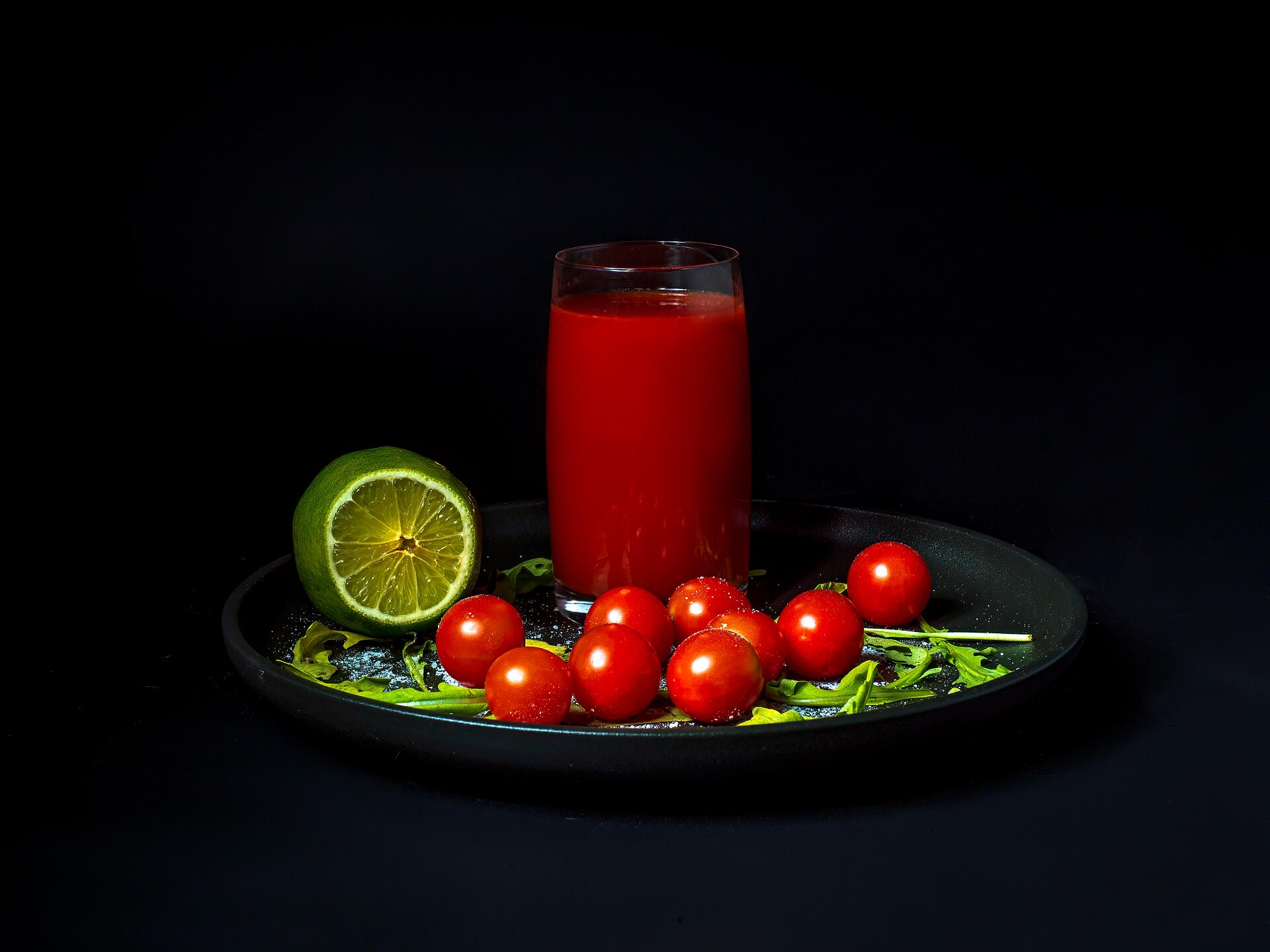
Fresh tomato juice is a simple way to use ripe tomatoes when you have more than you need for salads or cooking. It has a naturally sweet and slightly tangy flavor, especially when you use tomatoes that are fully ripe.
Unlike packaged tomato juice, homemade tomato juice lets you control the flavor yourself. You can keep it simple with a little salt and lemon, or add black pepper and celery for a more savory taste.
This recipe uses fresh, raw tomatoes and just a few basic ingredients.
Ingredients for Tomato Juice
Makes about 2 small glasses.
- 5–6 medium ripe tomatoes (about 600–700 g)
- 1 tablespoon fresh lemon juice
- A small pinch of salt
- A little black pepper (optional)
- 1 small celery stalk (optional)
Choose tomatoes that are ripe, juicy, and full of flavor. Tomatoes that are still firm and pale may produce a less flavorful juice.
Roma tomatoes work well if you prefer a thicker tomato flavor. Juicier varieties are a good choice if you want a lighter drink.
How to Make Fresh Tomato Juice
- Wash the tomatoes and remove the stems.
- Cut the tomatoes into smaller pieces and pass them through your juicer.
- Stir in the lemon juice and a small pinch of salt.
- Add black pepper if desired, then taste and adjust the seasoning.
Chill before serving if you prefer cold tomato juice.
The finished juice should taste fresh and slightly tangy, with the natural tomato flavor still coming through.
How to Season Tomato Juice
Tomatoes already have plenty of flavor, so you don't need many extra ingredients. The right seasoning simply makes the juice more enjoyable.
Lemon juice: A little lemon adds freshness and balances the natural sweetness of ripe tomatoes. Start with one tablespoon and adjust to taste.
Salt: A small pinch brings out the tomato flavor. Be careful not to add too much, especially if you're using tomatoes that are already quite flavorful.
Black pepper: This gives the juice a gentle warmth and works well with the natural savory taste of tomatoes.
Celery: Add a small celery stalk if you enjoy a fresher, more vegetable-like flavor. It pairs naturally with tomato.
If you prefer a simple tomato juice, tomatoes, lemon, and salt are enough. You don't need to add every seasoning.
Which Tomatoes Are Best for Tomato Juice?
The quality of your tomatoes makes a noticeable difference to the finished juice.
Look for tomatoes that:
- Feel ripe and slightly soft when gently pressed.
- Have a fresh tomato smell.
- Are free from mold, bruises, and damaged areas.
- Have a rich color rather than looking pale or underripe.
Roma tomatoes are a popular option because they have a relatively concentrated tomato flavor. If you want more juice, choose ripe, juicy tomatoes instead.
Avoid using tomatoes that are still hard and underripe. Their flavor can be too mild and slightly sour.
Should You Peel or Remove the Seeds from Tomatoes?
For most homemade tomato juice, there's no need to peel the tomatoes or remove their seeds before juicing.
The juicer separates much of the pulp and skin from the liquid, so you can simply wash the tomatoes, remove the stems, and cut them into pieces.
If you prefer a particularly smooth drink, you can strain the finished juice through a fine sieve. This is a matter of texture rather than a necessary step.
How to Store Homemade Tomato Juice
Fresh tomato juice tastes best when served soon after making it.
If you have leftovers, transfer the juice to a clean, airtight bottle and refrigerate it promptly. Keep it cold and try to drink it within 24 hours for the freshest flavor.
The juice may separate while sitting in the refrigerator. This is normal for fresh juice, so stir or shake it gently before drinking.
If it develops an unusual fermented smell, visible mold, or unexpected fizzing, discard it.
You can find more advice in our guide to how long fresh juice lasts in the fridge.
Frequently Asked Questions
Can I make tomato juice with any type of tomato?
Yes, most ripe tomatoes can be used. Roma tomatoes give a stronger tomato flavor, while juicier varieties produce a lighter drink. The most important thing is to choose tomatoes that are fully ripe.
Do I need to cook tomatoes before juicing them?
No. This recipe uses fresh, raw tomatoes. Cooking changes their flavor and makes the result taste more like a cooked tomato drink or sauce base rather than fresh tomato juice.
Why does my tomato juice taste bland?
The tomatoes may not be fully ripe, or the variety may have a mild flavor. Try using riper tomatoes and adding a small amount of lemon juice and salt to bring out the taste.
Why is my tomato juice too sour?
Some tomatoes naturally have more acidity than others. Try using sweeter, fully ripe tomatoes and reduce the lemon juice. A small pinch of salt can also help balance the overall flavor.
Can I drink tomato juice without adding salt?
Absolutely. Salt is optional. If you prefer a plain tomato flavor or want to limit added sodium, simply leave it out.