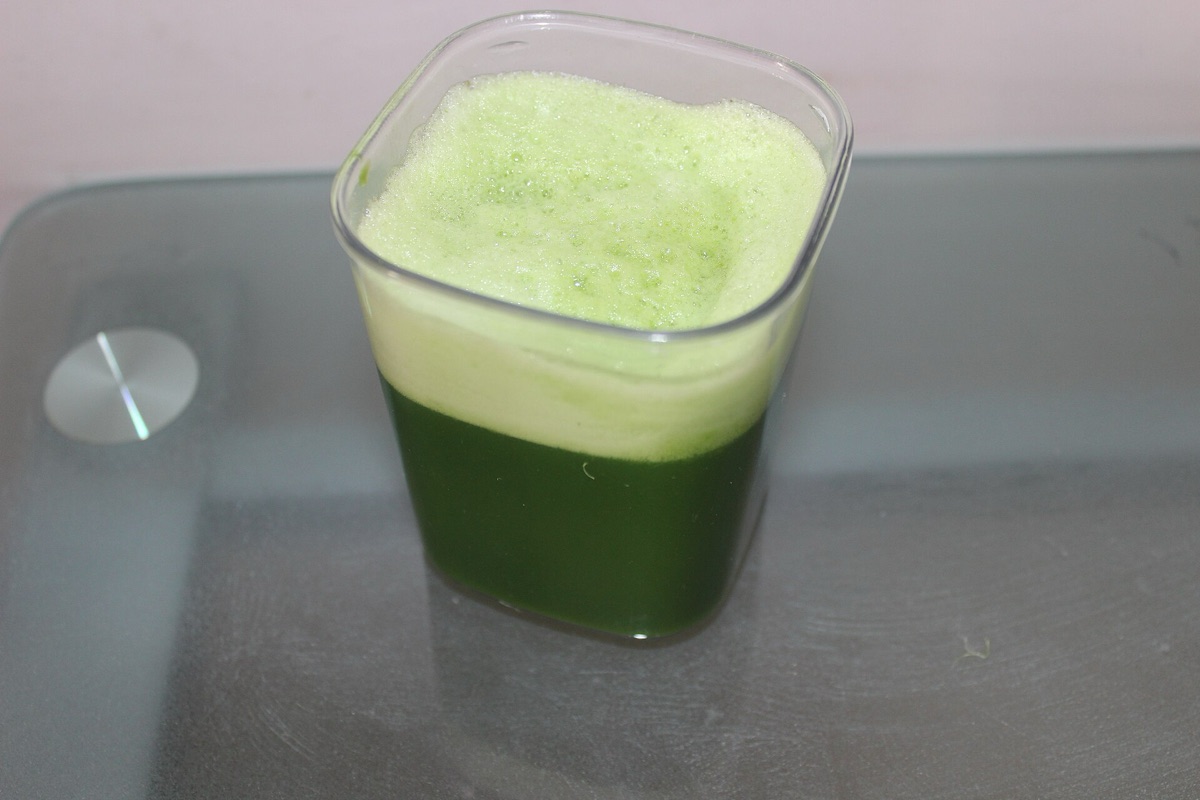
You finish juicing a few apples, pour the juice into a glass, and notice something you did not expect: a thick layer of foam sitting on top. Sometimes there is so much foam that it looks like you have lost a good part of your juice.
Is something wrong with your juicer? Does the foam mean the juice is full of air, or should you remove it before drinking?
In most cases, fresh juice foam is completely normal. It forms when air gets mixed into the juice during extraction. Some fruits and vegetables naturally produce more foam than others, and the type of juicer you use also makes a difference.
The good news is that you can usually reduce it with a few simple changes.
Why Does Fresh Juice Get Foamy?
Foam forms when air gets trapped in liquid and creates lots of tiny bubbles. During juicing, the fruit or vegetables are crushed, pressed, or spun, and air can become mixed into the extracted juice.
Natural compounds in produce, including certain proteins and plant materials, can help these bubbles stay around instead of disappearing immediately.
This is why freshly made juice sometimes has a frothy layer on top, even when you have not added anything extra.
The amount of foam depends on several things:
- The type of fruit or vegetable you are juicing.
- How much air gets mixed in during extraction.
- The speed and design of your juicer.
- How much pulp and fine plant material remains in the juice.
A little foam is normal. A large amount does not automatically mean your machine is broken.
Which Fruits and Vegetables Produce the Most Foam?
Some ingredients are much more likely to create foam than others.
Apples and Pears
Apples are one of the common reasons homemade juice gets foamy. Fresh apple juice can develop a thick, light-colored foam shortly after extraction.
Pears can behave similarly because their soft flesh and natural plant compounds can contribute to a frothy texture.
If you are making a large batch of apple juice, do not be surprised if the top looks almost like a layer of bubbles.
Leafy Greens
Spinach, kale, and other leafy greens can also produce noticeable foam. Their fine plant particles and fibrous structure can create a frothy mixture during extraction.
This is especially noticeable when you juice several handfuls of greens together.
Pineapple and Other Soft Fruits
Pineapple can produce foam during juicing, particularly when combined with other fruits. Its fibrous flesh creates a different texture from watery fruits such as watermelon.
Carrots, celery, and other vegetables can also produce some foam depending on the machine and how they are processed.
Can You Drink Fresh Juice With Foam on Top?
Yes. Foam by itself is not a sign that fresh juice has gone bad.
If you have just made apple juice, green juice, or another homemade drink, the foam is usually just a result of air bubbles and natural plant material.
You can drink it with the foam, stir it into the juice, or remove it with a spoon if you prefer a smoother glass.
However, do not use foam as a way to judge freshness. If juice has been sitting out too long, smells fermented, develops unexpected fizzing, or shows visible mold, discard it. Harmful bacteria can also be present without obvious changes in appearance or smell.
Fresh homemade juice should be refrigerated promptly rather than left on the counter for extended periods. For more guidance, see how long fresh juice lasts in the fridge.
How to Reduce Foam When Making Fresh Juice
You may not be able to eliminate foam completely, but these small changes can make a difference.
Feed Ingredients at a Steady Pace
Avoid pushing large amounts of produce into the juicer all at once. Feeding ingredients gradually gives the machine more time to process them and may help reduce excessive splashing and air mixing.
Follow the feeding instructions for your particular machine rather than forcing ingredients through the chute.
Mix Watery Ingredients With Fibrous Produce
If you are making green juice, try alternating leafy greens with ingredients such as cucumber or apple.
This can help the ingredients move through some juicers more smoothly. It will not guarantee less foam, but it may produce a more consistent mixture.
Let the Juice Rest Briefly
If you do not mind waiting, leave the juice in a glass for a minute or two. Some of the bubbles will rise and disappear naturally.
You can then skim the foam from the surface with a spoon.
This is particularly useful when serving apple juice or green juice to someone who does not enjoy a frothy texture.
Strain the Juice if You Prefer a Smoother Drink
A fine-mesh strainer can remove larger pieces of pulp and some of the foam.
Pour the juice slowly through the strainer rather than pressing everything through aggressively. Keep in mind that straining changes the texture and removes some of the remaining pulp.
If you prefer a thicker drink with more of the fruit's fiber, a blender vs. juicer comparison can help you decide which method suits your needs.
Does a Slow Juicer Produce Less Foam Than a Centrifugal Juicer?
Often, yes, but the difference depends on the machine and ingredients.
A centrifugal juicer uses a fast-spinning blade and basket to separate juice from pulp. The high-speed movement can introduce more air into the juice, which may create a noticeable layer of foam.
A slow juicer uses a crushing and pressing mechanism. It generally introduces less air during extraction, so the juice may look less frothy.
However, slow juicers can still produce foam, especially when processing leafy greens, celery, and other fibrous ingredients.
If your slow juicer produces more foam than expected, check that the parts are assembled correctly and that the filter is clean.
Why Does the Foam Separate From the Juice After a Few Minutes?
You may notice that the foam forms a separate layer above the liquid while the heavier pulp settles toward the bottom.
This happens because air bubbles are lighter than the juice itself, so they rise to the surface. Larger fruit and vegetable particles tend to settle in the opposite direction.
The result can be three visible layers: foam on top, liquid in the middle, and pulp at the bottom.
This is a normal physical process. If you also notice clear liquid and pulp separating in your glass, our guide explains why fresh juice separates after sitting.
The Bottom Line
Fresh juice foam is usually nothing to worry about. Apples, leafy greens, pineapple, and other fibrous ingredients can create plenty of bubbles during extraction.
If you prefer less foam, feed ingredients steadily, let the juice rest briefly, or strain it before serving. You do not need to throw away a fresh glass of juice simply because it has a thick layer on top.
A little foam is just part of making juice at home.